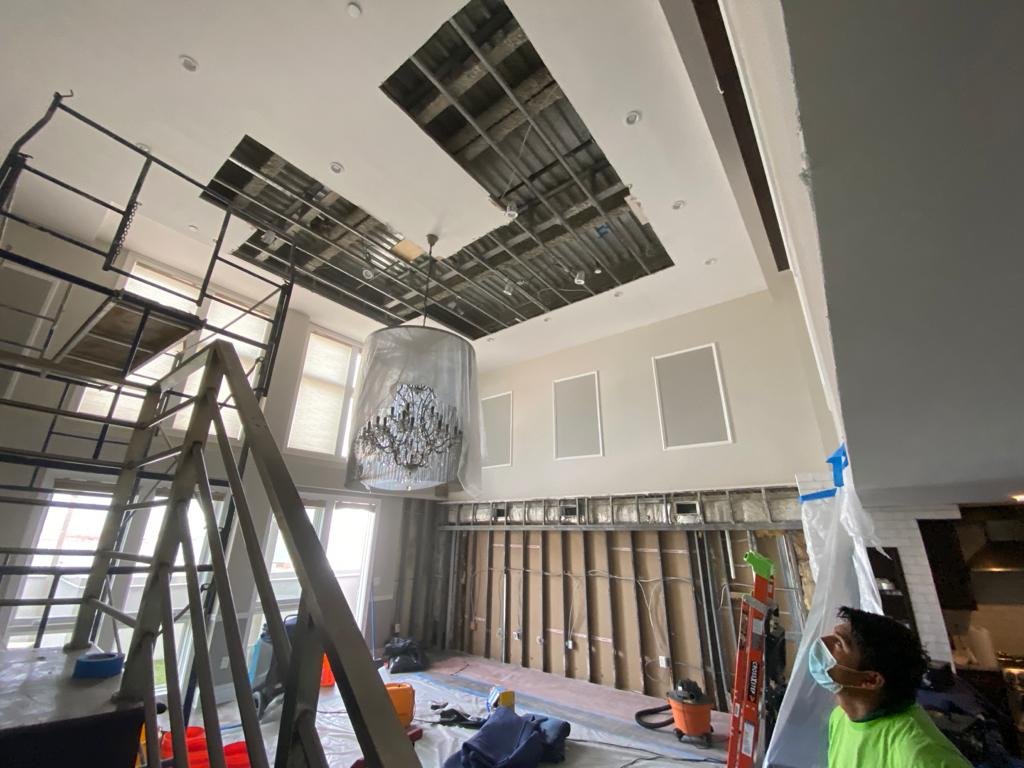
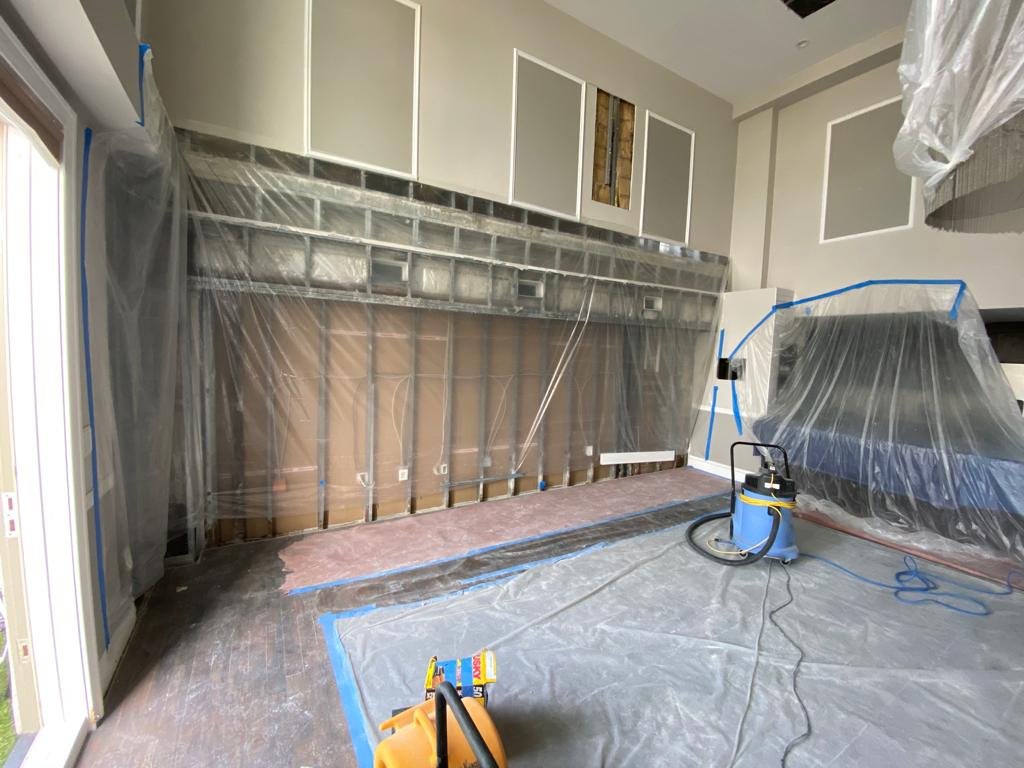
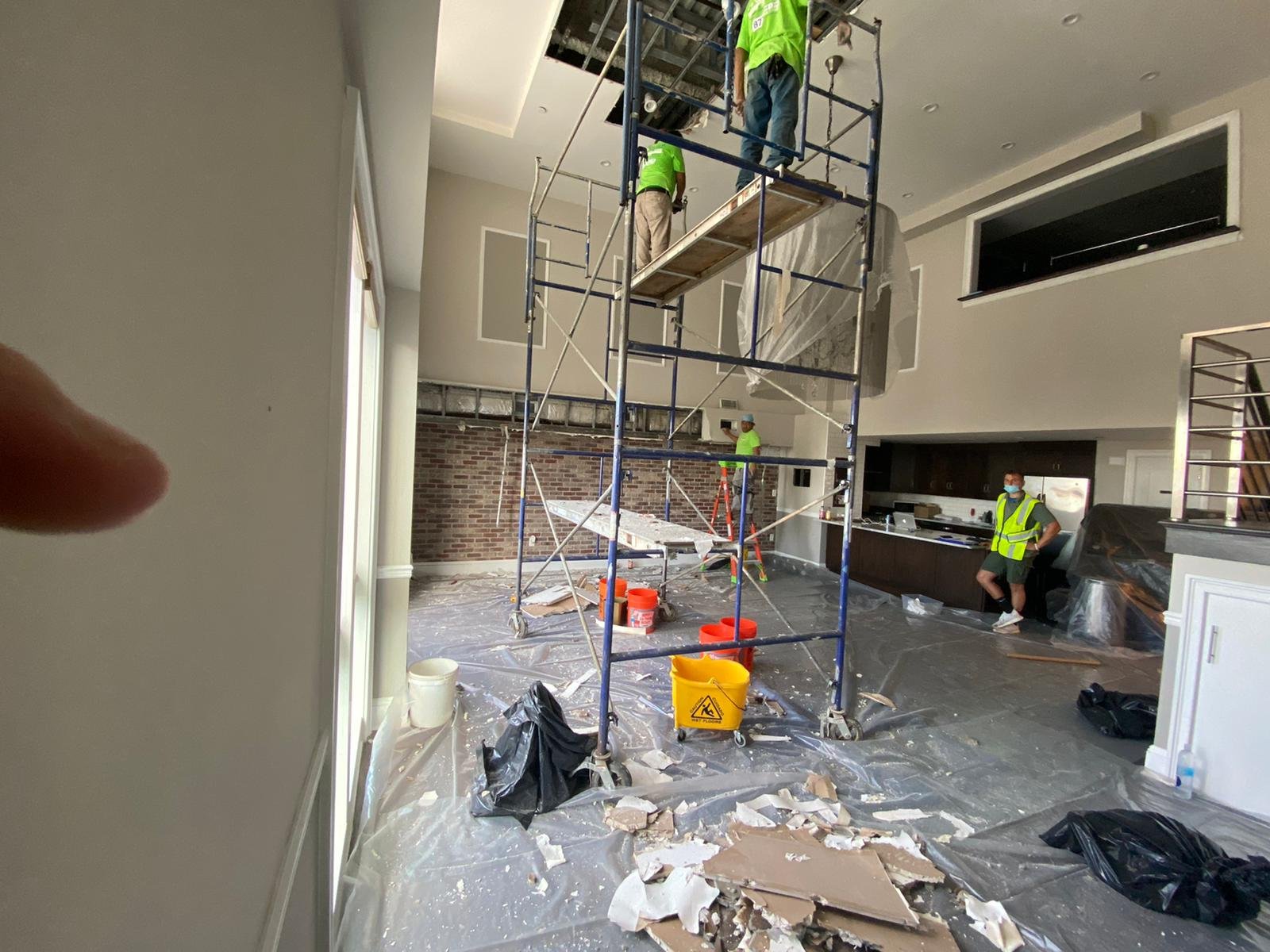
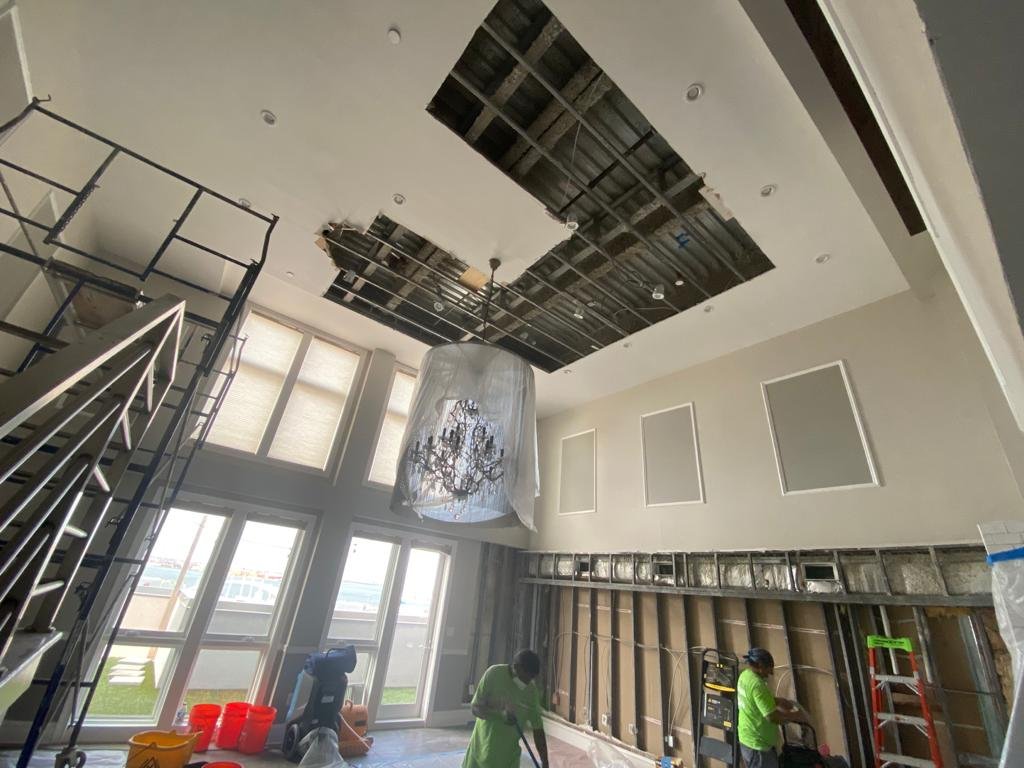
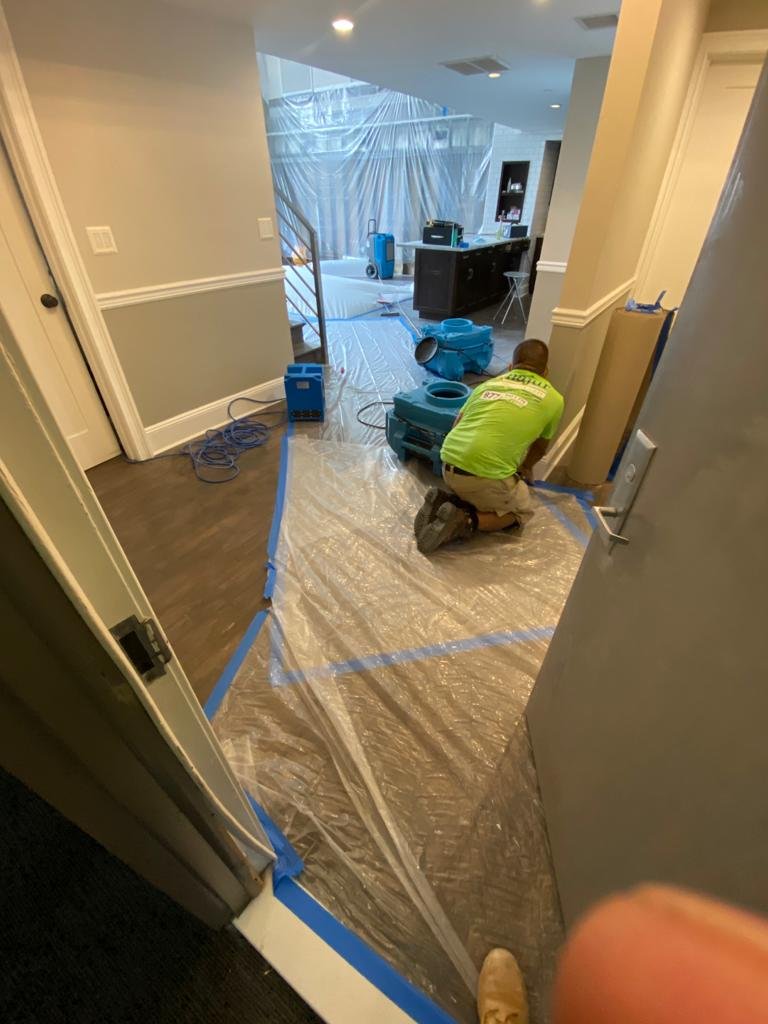
When water comes in, from a burst riser, a roof leak, an overloaded street drain, or a coastal surge, the next four hours decide what's salvageable. Anajur Construction Corp. is a Staten Island family business, NYC-licensed since 1997, handling water damage from extraction call through full rebuild under a single license.
Standing water on hardwood will cup the boards in two hours and crown them in twelve. Drywall absorbs moisture vertically through gypsum and laterally through paper; by hour four the studs behind it are wet, by hour twenty-four the cavity is a microbial incubator. Subfloor delaminates. Carpet pad becomes a sponge that re-wets the carpet above it for days. Get the first hours right and the rebuild stays small. Get them wrong and a one-room loss becomes a whole-floor reconstruction.
Anajur is a family business, not a franchise. The number on this page goes to a Staten Island operator on this borough's water-damage jobs since 1997. Calls answered around the clock, not a national dispatch queue, not a voicemail tree.
We operate from Staten Island, not a regional dispatch center across the harbor. That matters when the water is still coming in. Because we dispatch from inside the borough, not a regional call center, so a Staten Island call loses no time to cross-bridge transit. The crew that answers is the crew that comes. The first crew extracts, documents, and stabilizes while the rest of the response is scoped.
A water loss in a Manhattan high-rise and a water loss in a South Shore Cape are two different problems. Staten Island has the lowest housing density in New York City, the most extensive natural drainage network, and the largest concentration of homes in FEMA Special Flood Hazard Areas of any borough. None of that is incidental to a water-damage job. All of it is the job, and it is the borough where Anajur has worked since 1997.
The NYC DEP Bluebelt program preserves natural watercourses (streams, ponds, wetlands) as engineered stormwater drainage across roughly 16 South Shore watersheds. When a watershed exceeds capacity, runoff backs up into the streets and basements draining into it. South Shore homeowners see this as recurring flooding outside FEMA flood zones.
Large parts of the North Shore and older Mid-Island sit on a combined sewer system, stormwater and sanitary sewage share one pipe. When overwhelmed, overflow surfaces in basements before reaching any outfall. Every Staten Island heavy-rain call raises whether the water is Category 3 under IICRC S500.
Coastal AE and VE zones cover most of South Beach, Midland Beach, Ocean Breeze, New Dorp Beach, Oakwood Beach, Great Kills, and Tottenville. Surge events bring saltwater and marine sediment into homes; saltwater attacks copper plumbing and electrical components within hours. Reclaimed-marsh soils across the South Shore sit close to the water table year-round, so basements re-wet through cracks during dry-down.
The ANSI/IICRC S500 standard defines three Categories of water based on contamination level. The Category drives PPE, antimicrobial protocol, demolition scope, and disposal requirements. It is determined on site through inspection, not assumed from the source; the IICRC's January 2026 position statement explicitly rejects blanket classification of weather-related water as automatically Category 3. Anajur documents it in writing, with photo evidence and moisture readings, before any extraction begins.
Supply-line break, water-heater failure, ice-maker line, melted snow tracked indoors. Originates clean and does not pose a health hazard at release. Untreated Category 1 becomes Category 2 within roughly forty-eight hours from material leaching and microbial growth. Fast extraction and aggressive dry-down preserve the lower-cost mitigation scope.
Dishwasher or washing-machine discharge, aquarium failure, toilet overflow with no fecal matter, sump-pump failure, hydrostatic intrusion through foundation cracks. Requires antimicrobial application and HEPA filtration during demolition. Most Staten Island Bluebelt-overflow basement events fall here at minimum.
Sewage backup through a fixture or main, combined sewer overflow, river or coastal floodwater, prolonged Category 2 left untreated. Requires full PPE, source containment, demolition of all porous materials in contact with the water, antimicrobial pre-treatment, and documented contaminated-debris disposal. Saltwater coastal-surge events on Staten Island are presumed Category 3 until inspection determines otherwise.
The IICRC S500 standard is what insurance adjusters reference when restoration work is disputed. Anajur follows S500 protocols on every job, from first call to painted baseboard, all under one Home Improvement Contractor license.
You call (917) 969-1378. A Staten Island operator answers, not a national call center. We confirm location, source, scope, and access. A crew mobilizes from inside the borough, no cross-bridge delay between your call and boots on site.
Before extraction, we establish the Category of water (1, 2, or 3) and Class of damage. The IICRC's January 2026 position statement explicitly rejects blanket Category 3 classification: every job receives a documented determination based on actual conditions.
Submersibles run continuously where the water table re-feeds the basement through cracks. Truck-mounted units pull via long hose runs when curbside access works. On older South Shore streets where trucks can't get close, we shuttle portable extractors to the nearest grade.
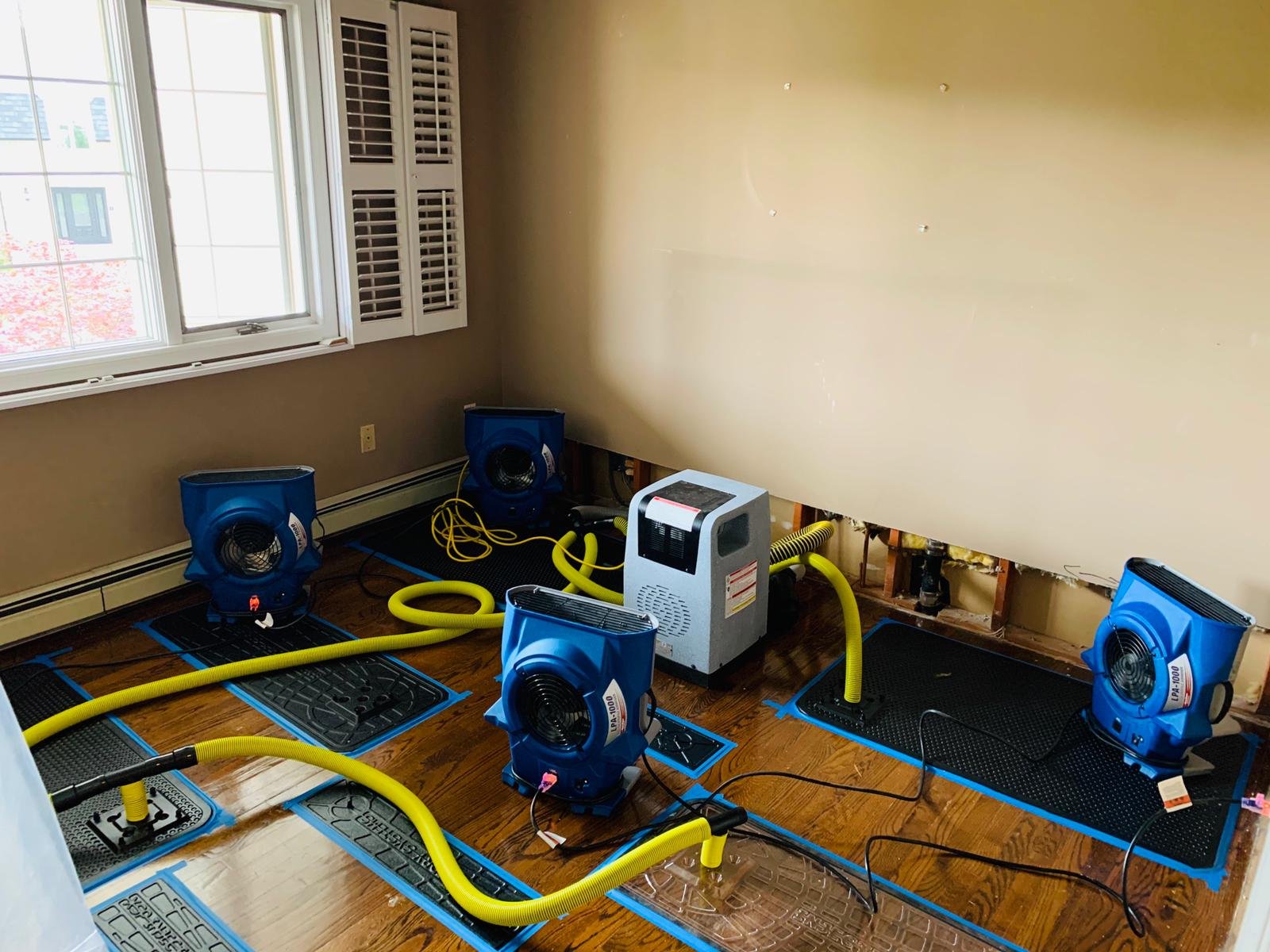
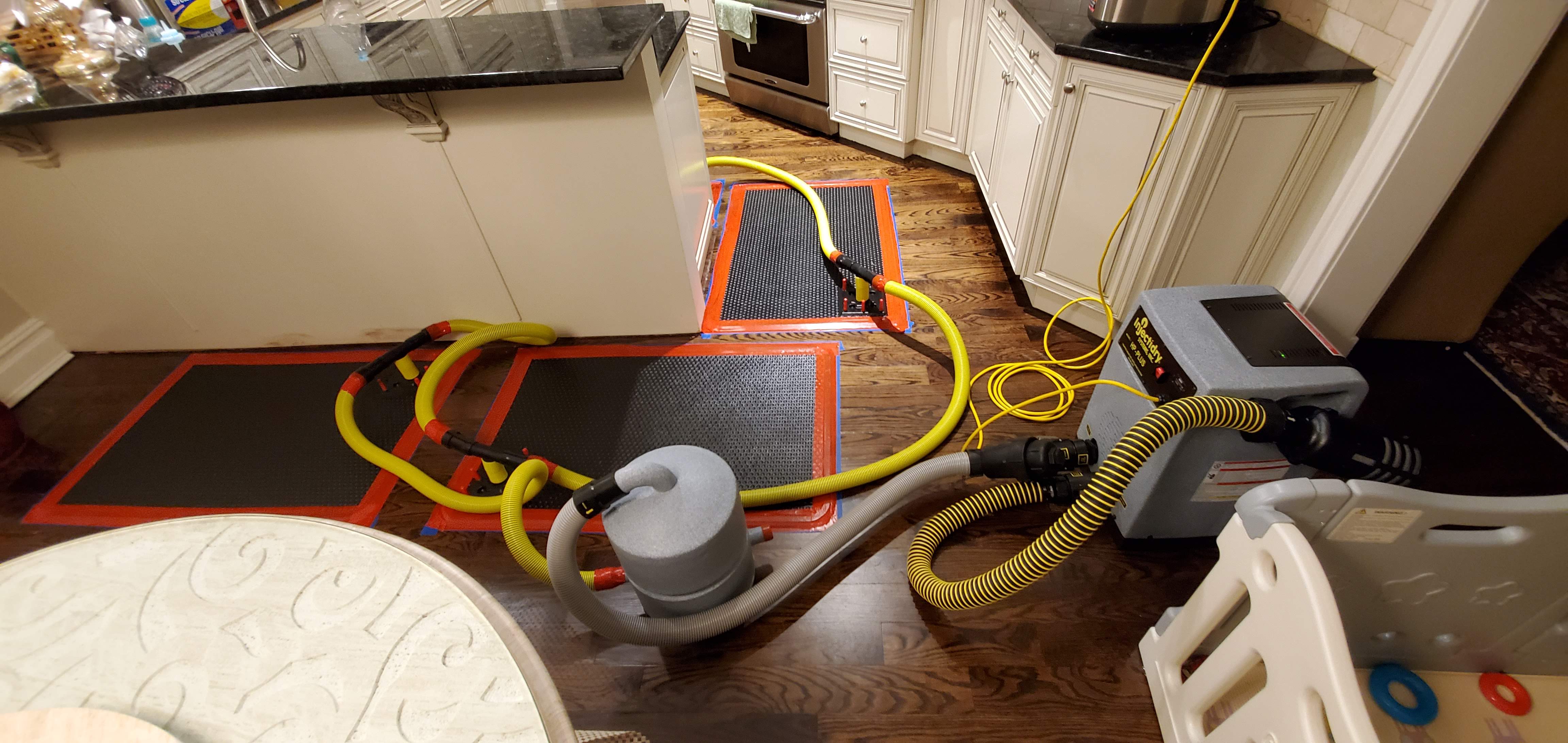
Vapor-barrier walls and zip-door entry systems isolate the affected area. Inside containment, low-grain refrigerant or desiccant dehumidifiers run paired with axial or centrifugal air movers; HEPA scrubbers in Category 3 environments. Daily pin and pinless moisture readings documented in psychrometric drying logs that meet S500 requirements.
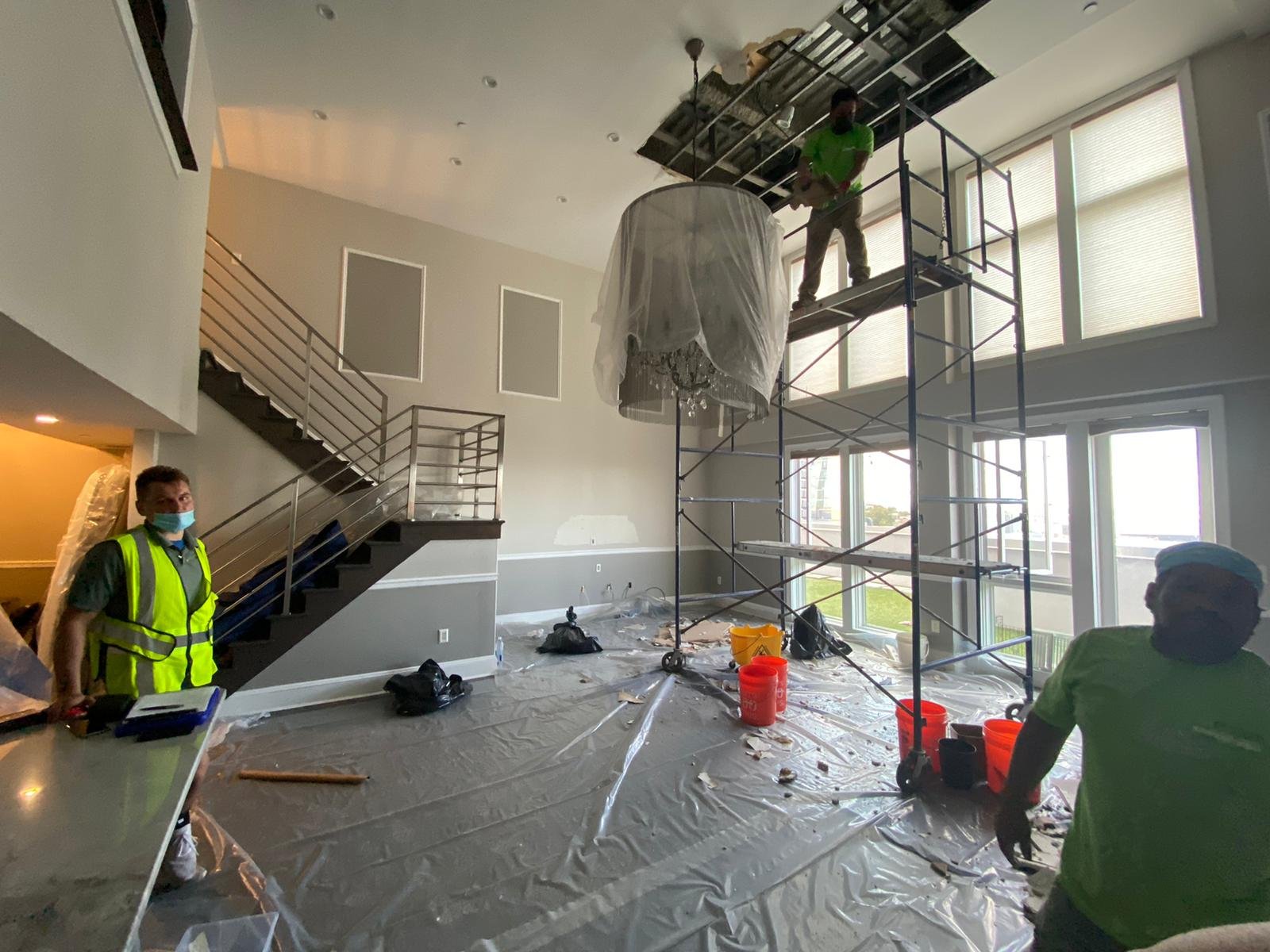
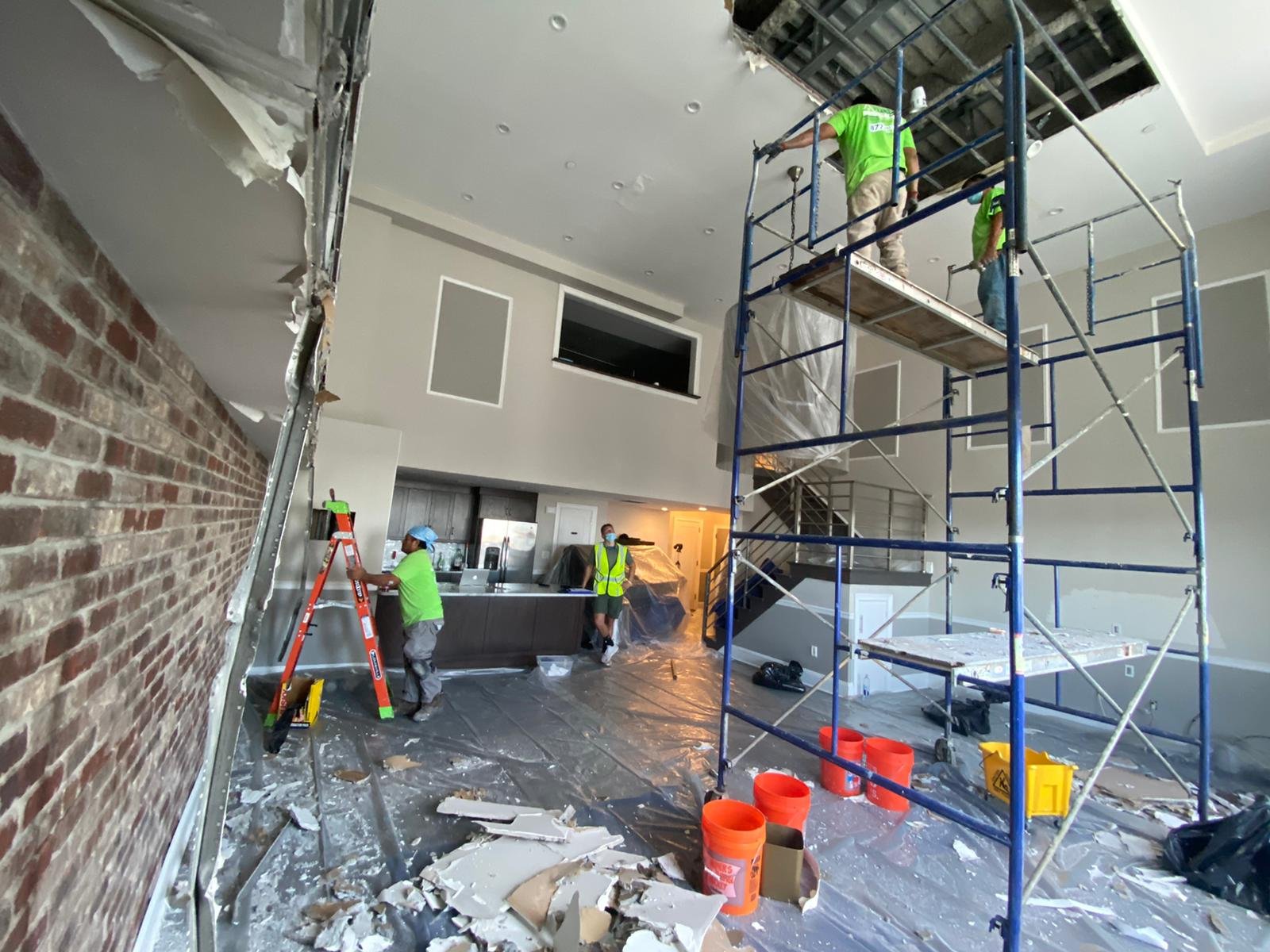
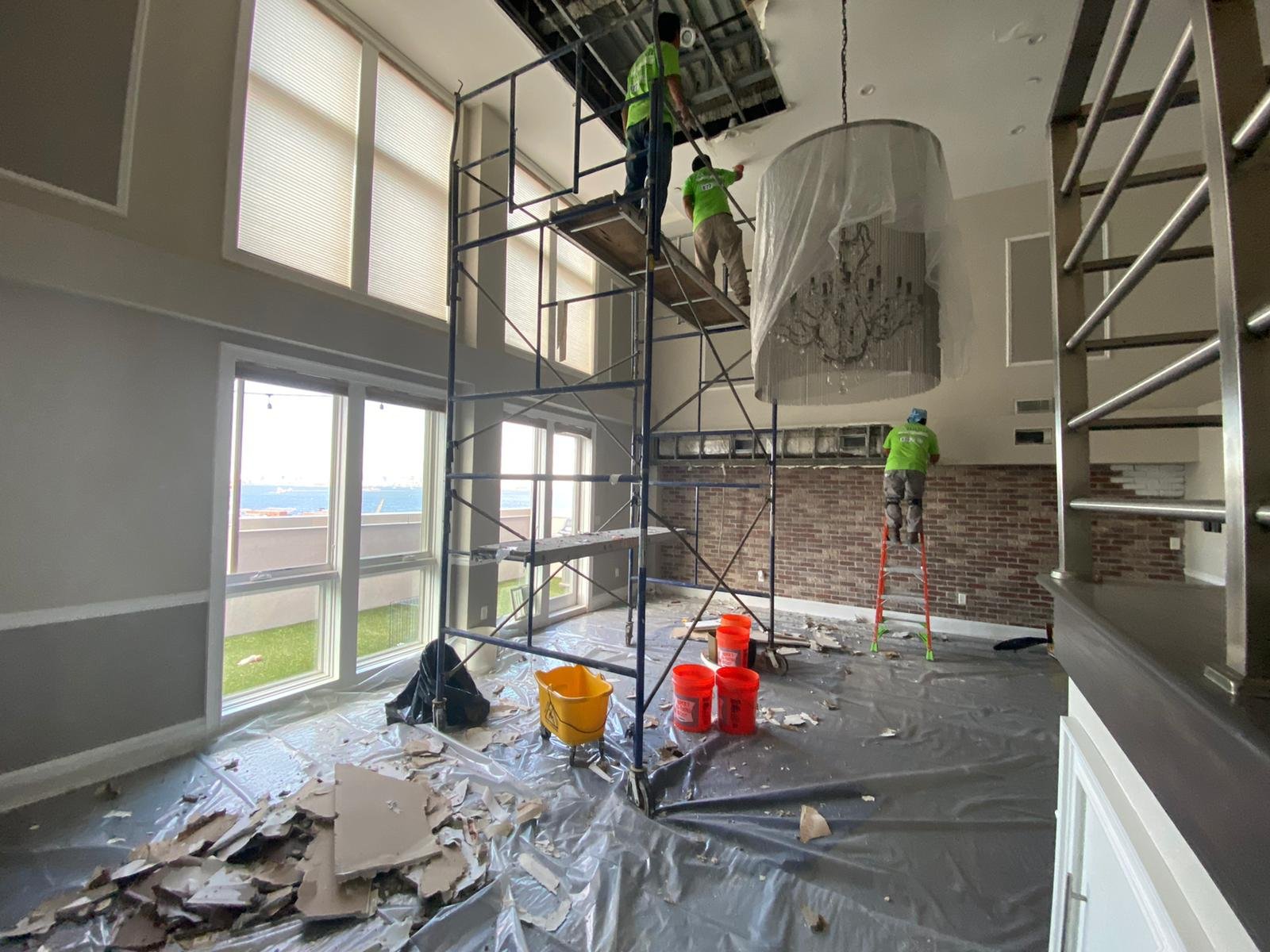
Wet drywall flood-cut at the high-water line plus twelve inches; plaster-and-lath wholesale where it has wicked moisture laterally. Saturated insulation, swollen baseboards, warped subfloor, contaminated cabinetry, removed per protocol. Category 2 and 3 work includes antimicrobial application; saltwater coastal-surge cases get salt-rinse protocols.
This is where most restoration crews hand the homeowner a punch list and walk off. We don't. Framing repair, drywall hang and finish, insulation, primer and paint, baseboard, tile, cabinets, fixtures, structural scope where the work demands it, under HIC #1220350-DCA with NYC DOB permits where required. Plumbing and electrical permits filed through partnered LMP and LE. One contractor through the certificate of completion. See the full reconstruction scope for permit timelines, Xactimate methodology, and what each rebuild phase covers.
When the moisture meters read dry and demolition is complete, reconstruction begins, drywall, flooring, framing, cabinetry, paint, finish carpentry. In New York City this work requires a NYC DCWP-licensed Home Improvement Contractor.
SEE RECONSTRUCTION & REPAIRS →There is no honest flat price for water damage restoration, and any contractor who quotes one over the phone is guessing. Angi’s 2026 national guide puts the average near $3,864, with jobs running from a few hundred dollars for a small caught-early leak to $16,000 or more for severe Category 3 losses. That range is wide for a reason. Four things set your number: the IICRC Category of water, the Class of damage, the square footage and saturation depth, and whether the job stops at mitigation or runs through full reconstruction.
The two phases price very differently, and most of the bill sits in the second one:
The variables that decide where in the range a Staten Island job lands:
Anajur does not quote a price before inspection: Category and Class cannot be read off a phone call, and a number set without them is either padded or short. The on-site assessment is free, and it is where your actual figure comes from, documented in the line-item Xactimate scope your carrier expects.
A water-damage claim is a paper-trail business. The faster the carrier can verify that the work performed matches the work scoped, the faster the claim closes. Anajur produces the documentation a carrier needs from the first hour on site.
The carrier file we build covers what an adjuster needs to approve scope and pay the claim:
What we will and will not do on a Staten Island water-damage claim:
Most Staten Island homes we restore have been water-damaged before. Combined sewer infrastructure, recurring nuisance flooding in Bluebelt watersheds, high water tables in reclaimed-marsh South Shore neighborhoods, restoration without prevention invites the next event. Anajur addresses prevention as part of the rebuild scope.
A backwater valve is a one-way check valve in the sewer lateral that prevents waste from flowing back into the home when the municipal main is overwhelmed. NYC requires DOB filing and a Licensed Master Plumber. Anajur does not self-perform plumbing-permit work (that scope sits with the LMP), but we coordinate filing, rough-in scheduling, and integration with the rebuild. Combined sewer overflow zones on the North Shore and Mid-Island provide the most measurable risk reduction.
The most common Staten Island heavy-rain water-damage call is a sump-pump failure: undersized pump, stuck float, frozen discharge line, or power out. We size pumps to actual hydraulic load, install battery-backup secondary pumps, and route discharge to grade in a path that does not return groundwater to the foundation.
Appendix G of the NYC Building Code governs flood-resistant construction in Special Flood Hazard Areas, the FEMA-mapped A and V zones covering much of the South and East Shore. When a SFHA home undergoes substantial improvement or substantial damage repair, Appendix G applies: lowest floor at or above DFE, mechanical elevated, flood vents below DFE, breakaway walls in V zones. Anajur's permit history covers this work.
The regulatory landscape for Staten Island flood-zone reconstruction changed significantly after October 2012. NYC DOB adopted Appendix G of the Building Code as the flood-resistant construction standard, and FEMA Special Flood Hazard Area maps were updated. For a homeowner rebuilding after water damage, those rules determine what gets built, where, and at what elevation, and whether the FEMA fifty-percent rule classifies the property as substantially damaged.
If repair costs reach fifty percent or more of the home's pre-damage market value, NYC DOB classifies the property as substantially damaged. That triggers Appendix G compliance, expensive structural changes for any home not at current code:
Increased Cost of Compliance is an NFIP coverage that pays up to thirty thousand dollars for bringing a substantially damaged home into floodplain compliance. Paid in addition to basic NFIP building coverage.
Scenario-by-scenario repair guides, plus long-form pieces on the standards, the documentation discipline, and the carrier workflow that decide how a water damage file resolves. Written from the contractor's side of the file.
When water surfaces at the ceiling, the failure usually started a floor above. How we locate the origin, dry the cavity, and document the path for the claim.
Pinhole leaks, freeze bursts, and sudden-and-accidental supply-line failures that cascade through floors, and the coverage argument that gets the rebuild paid.
Why a wet floor cups or buckles, the fiber-saturation science behind whether it can be dried flat or has to come up, and how the repair is scoped on the claim.
What our crews capture before the first extractor switches on, and why the adjuster’s opening question is always about that evidence.
How the S500 Category call actually gets made on a live job: the contamination testing, the source tracing, and why misclassification is the most expensive mistake in the file.
One bathroom loss followed from extraction through the Xactimate scope and the supplement fight, with the like-kind-and-quality arguments that carried it.
Anajur Construction Corp. operates exclusively on Staten Island, every residential ZIP code, every neighborhood, every flood profile. We do not subcontract to crews dispatched from outside the borough.
New Creek watershed. The Bluebelt expansion completed October 2023 covers 2,249 acres and meaningfully reduced rainfall flooding here. Coastal A-zone exposure remains; surge events bring saltwater Category 3 conditions. Mechanical-equipment elevation under Appendix G is a recurring rebuild scope.
South Shore Bluebelt watersheds. Living Breakwaters off Tottenville completed 2024, the first nature-based coastal infrastructure of its scale in the city. Coastal A and V zones inland from Raritan Bay. Reclaimed-marsh soils and high water tables.
Jack's Pond Bluebelt, Wood Duck Pond, Woodrow-Annadale watershed. Multi-phase South Shore drainage upgrades. Inland heavy-rain flooding has measurably reduced; coastal exposure on bay-facing edges remains. Sump-pump-failure calls common in heavy rain.
North Shore. Older housing stock, combined sewer infrastructure, CSO vulnerability during heavy rain. Aging cast-iron laterals are a frequent Category 3 source. Steeper topography concentrates surface runoff on lower streets near the Kill Van Kull.
Mixed elevation profile, dramatically. Todt Hill rises higher than any other natural ground on the eastern seaboard south of Maine, effectively zero flood exposure up there. The Stapleton lowlands and Bay Street corridor are the opposite, with combined-sewer vulnerability. Calls in 10304 split sharply by elevation.
Mid-Island and the western side of the borough. Inland drainage. Sump-pump failures and cast-iron lateral failures in older housing stock are frequent sources. Anajur covers all of it.
The industry default: a mitigation outfit shows up, pulls water for a few days, demos the wet materials, hands over a damage list, and you're on your own to source a separate GC for the rebuild. Two scopes. Two estimates. Two schedules. Anajur was filed as a New York construction corporation eleven years before we owned a piece of restoration equipment. The HIC license came first; cleanup was layered on top.
Anajur Construction Corp. has filed over 118 permits with NYC DOB on Staten Island going back to at least 2012, with the corporate filing on record at NY Department of State since July 8, 1997 (Entity #2160072). The history spans Alteration Type 1 jobs, Alteration Type 2 work, basement reconstructions, foundation repairs, and structural scope across South Shore, East Shore, and inland Staten Island. Verifiable through NYC DOB BIS, DCWP licensee search, and NY DOS records.
The current NYC DCWP Home Improvement Contractor license (#1220350-DCA) is active and verifiable. It authorizes Anajur to legally pull NYC DOB permits for water-damage rebuild work. Plumbing and electrical permits are coordinated through partnered LMP and LE filings. Anajur Construction, one accountable contractor from first hour through completion.
If water is actively coming in: shut the source if you can, get power out of the affected area, document everything, and call a contractor whose paperwork an adjuster will respect.
If the water is from a supply line, water heater, appliance hose, or fixture, shut the main water valve, usually at the front foundation wall near the meter. If standing water touches electrical outlets, panels, or appliances, stay out until the circuit is shut at the panel.
Walk every affected room with a phone camera. Shoot wide, then close. Capture the source, the water level on the wall, and the contents in their pre-cleanup state. Carriers reimburse against documented loss; undocumented losses become disputes.
The number is direct. A Staten Island operator picks up, not a franchise dispatch queue, not a voicemail tree. We confirm the loss, mobilize a crew, and meet you at the property.
Most homeowner's policies require prompt notification. Open the claim once the crew is dispatched, the carrier assigns an adjuster and claim number. We meet the adjuster on first inspection.
Or request an on-site assessment · we also handle coastal and storm flood cleanup.
When water comes in, call once.
Anajur is a Staten Island family business, NYC HIC since 1997 (#1220350-DCA). We answer the phone, run the extraction, coordinate the permit filings through the licensed trades, and finish the rebuild, all on the same paperwork. For the rebuild-phase scope in detail, see Reconstruction & Repairs After Water Damage.