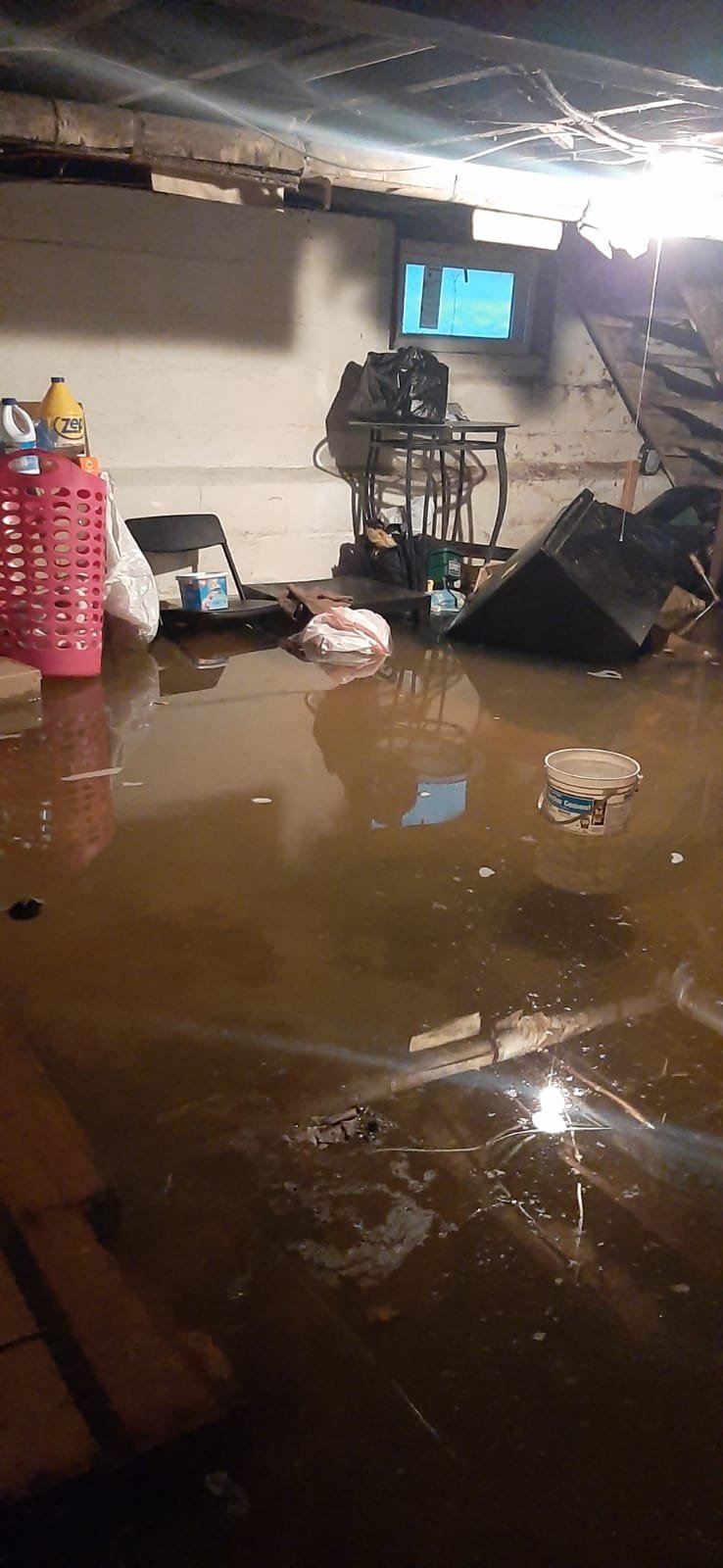
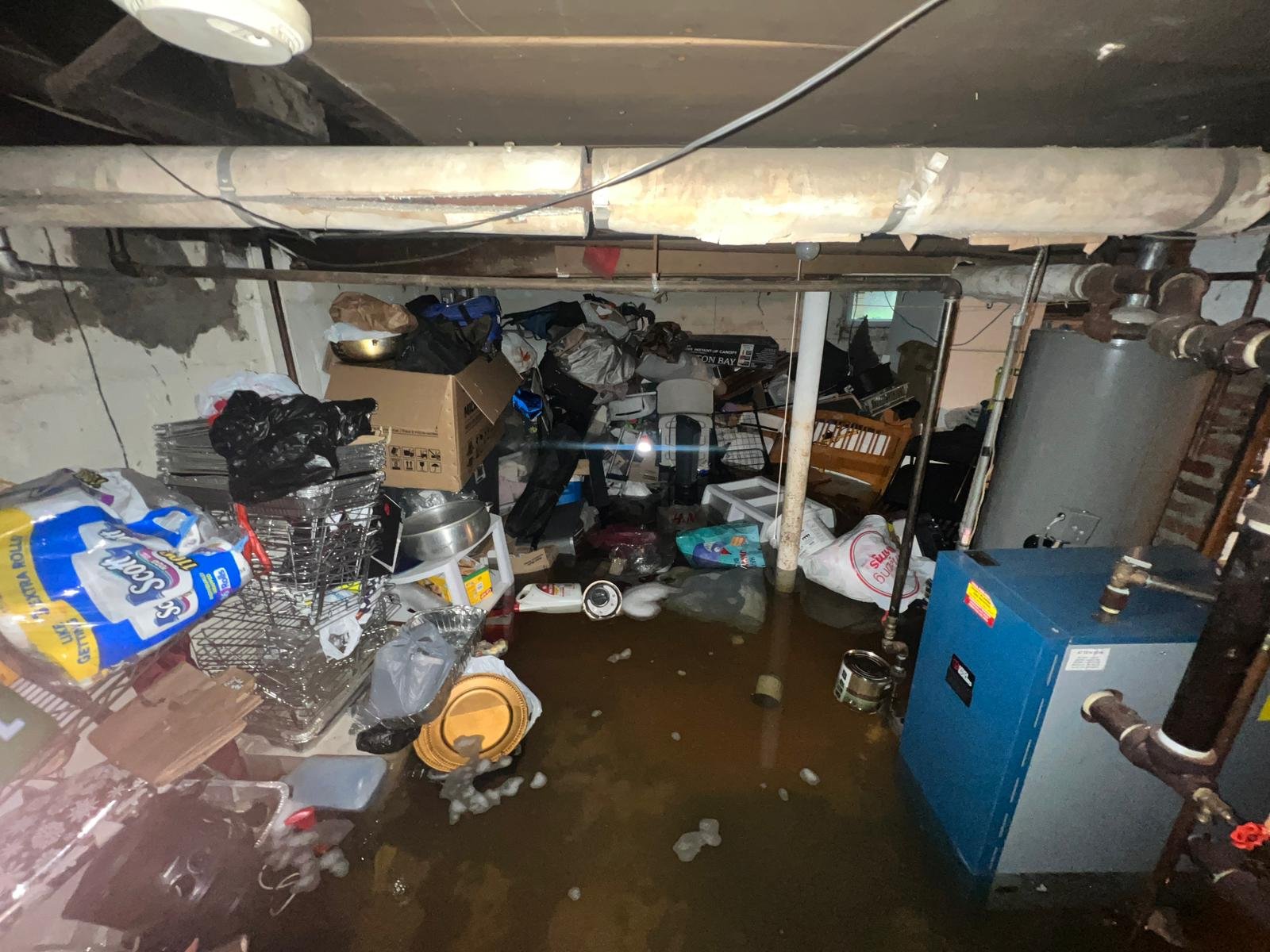
Anajur Construction Corp. handles flood cleanup and reconstruction on Staten Island under one NYC Department of Consumer and Worker Protection license, extraction, structural drying, demolition, permits, and finished rebuild. Family-owned, Staten Island based, serving all thirteen ZIP codes since 1997.
Three things make Staten Island flooding distinct from a pipe burst or a roof leak. The borough sits between Raritan Bay, Lower New York Bay, the Kill Van Kull, and the Arthur Kill, four bodies of water that deliver salt, marine sediment, and decades of industrial residue when storm surge arrives. Heavy rainfall tells a different story: New York City's older drainage in many Staten Island neighborhoods is a combined sewer system, where stormwater and sanitary sewage share the same pipes. When that system is overwhelmed, the overflow ends up in basements, on streets, and inside homes. And in the South Shore neighborhoods that were hit hardest by Hurricane Sandy, low elevation and reclaimed-marsh soils mean the water table sits high year-round, documented on the FEMA Flood Map Service Center.
The cleanup protocol on a Staten Island flood is not the same as a residential supply-line burst in midtown. It demands a Category determination, contamination protocols, and reconstruction expertise, under one license.
Saltwater attacks copper plumbing, electrical panels, and HVAC condensers within hours. Arthur Kill is one of the most heavily industrialized waterways in the Northeast, refineries, fuel terminals, and legacy contamination upstream. Surge water is presumed contaminated until inspection determines otherwise.
Many Staten Island neighborhoods sit on combined sewer infrastructure, where stormwater and sanitary sewage share the same pipes. When that system is overwhelmed during heavy rain, the overflow surfaces in basements and on streets. Every Staten Island heavy-rain flood event raises the question of whether the water in your home is a Category 3 black-water loss under the IICRC S500 standard. When the inflow exceeds pump capacity and the pit tops out, the loss reads as sump pump failure when storm overwhelm causes pit topping, a different coverage pathway than NFIP flood.
The Institute of Inspection, Cleaning and Restoration Certification publishes the ANSI/IICRC S500 standard for water damage restoration. It is the document insurance adjusters reference, the document courts cite when restoration work is disputed, and the document Anajur follows on every job. Here is what that looks like in practice.
You call (917) 969-1378. The call is answered by an Anajur principal, not a national call center, not a franchise dispatch queue. We confirm location, source of water if known, and rough scope. We mobilize from 10309 and coordinate arrival.
No pump starts until the walk-through ends: the crew inspects, photographs, and logs the conditions, a process to establish the Category of water (1, 2, or 3) and the Class of damage. On this island, flood water earns a Category 3 designation more often than not: a combined sewer sharing the storm load, brackish surge off three waterfronts, runoff through industrial corridors. The designation is still earned on site, by inspection, never assumed from the address. Per EPA's mold and moisture guidance, water-damaged areas should be dried within 24-48 hours to prevent mold growth, the same window IICRC S500 references for psychrometric drying targets. If a job tests positive for mold, that is a separate IICRC S520 specialist scope. Anajur does not perform mold remediation; we coordinate a qualified remediation specialist and sequence the rebuild around that phase.
Per the IICRC's January 2026 position statement on Category of Water and Weather-Related Events, blanket classifications are not appropriate. Every Anajur job receives a documented preliminary determination.
Submersible pumps for high-water-table basements, where water re-enters through cracks during dry-down. Truck-mounted extractors where street access permits. Portable extraction with crew shuttling on the narrow residential streets common in Tottenville, the East Shore, and parts of the North Shore. Weighted extraction tools for saturated carpet.
Commercial dehumidifiers, refrigerant or desiccant depending on conditions, paired with axial or centrifugal air movers based on the affected materials. HEPA air scrubbers for Category 3 environments. Daily moisture meter readings, both pin and pinless, documented in psychrometric drying logs that meet ANSI/IICRC S500-2021 requirements and adjuster expectations.
Category 3 work requires full personal protective equipment, antimicrobial application to non-salvageable materials prior to demolition, and documented disposal of contaminated debris. Saltwater surge cases additionally require salt rinse protocols, because residual chloride continues to wick from masonry into framing for months after a flood is "dry."
Wet drywall is flood-cut at the high-water line plus 12 inches in standard cases; the rest is preserved. Plaster-and-lath, common in pre-war Staten Island housing, wicks moisture laterally and must be demolished wholesale. What the flood ruined comes out under protocol: insulation that drank the water, baseboards that swelled, subfloor that warped, cabinetry the contamination condemned. Bagged and disposed of, not buried behind new drywall.
We provide what insurance adjusters require: IICRC S500 moisture readings, daily drying logs, line-item Xactimate scope of work, photographic documentation, and DCWP-licensed permit records. As a NYC-licensed Home Improvement Contractor, our paperwork carries weight that handyman estimates do not. Every major homeowner's carrier writing in New York has been across the table from this office, and we coordinate directly with adjusters from the moment we arrive on site.
Most flood outfits demobilize when the air movers leave, and the homeowner inherits a gutted shell plus a second contractor search. Anajur comes back for the rebuild: insulation, drywall, trim, flooring, tile, cabinetry, fixtures, and structural repairs where the water demanded them, under the same HIC #1220350-DCA, with NYC Department of Buildings permits where the scope demands them. The house leaves dry, clean, and finished. One contractor, one timeline, one signature on the certificate of completion. See reconstruction scope details for ALT-2 permit framework, Xactimate methodology, and what the rebuild phase covers.
Flood losses are written in Xactimate line items that NFIP WYO desks and primary-carrier program desks both recognize. Anajur estimators pull live Staten Island pricing at scope time from the current Xactimate ZIP price list, no static dollars-per-square-foot figures published anywhere on this page. The selector families below are the spine of every Staten Island flood claim Anajur runs, with Cat 3 default-scope assumptions for any contaminated floodwater event.
Sump pump and sewage ejector replacement after a flood event submerges the equipment. Anajur's standing Licensed Master Plumber handles the permit-side work; flood-claim selectors capture the post-event mechanical replacements separately from any concurrent pre-event maintenance scope.
Floodwater Cat 3 default-scope writes WTRDRYWLS labor burden, full-room WTREXT truck-mount extraction, and WTRINS insulation removal across all impacted assemblies. Equipment-day selectors (WTRDHM, WTRDRY) trend longer than HO-3 sudden-discharge jobs because contaminated saturation extends drying targets.
Saltwater inundation events on the South Shore and East Shore corrode framing fasteners faster than freshwater Cat 3 losses; the rebuild scope routinely includes joist sister, stud replacement, and sill plate selectors after FEMA-zone clearance.
Any conductor that took flood submersion is replaced, not reset. Panel inspection, branch-circuit replacement, and GFCI work are routine after Staten Island flood events. Permit and inspection coordinated with the Licensed Electrician sub before any closing-in.
Default-scope on every floodwater event under IICRC S500. NFIP WYO adjusters expect ANTM on Cat 3 files; biocide application protocol documented per S500 with photographic evidence of impact zone coverage before reconstruction begins.
No static dollars-per-square-foot figures appear on this page by policy. Staten Island flood-cleanup pricing shifts materially month over month and event over event, particularly after declared disasters when material costs and labor availability move. Anajur estimators source line-item values from the live ZIP-coded Xactimate price list at the moment of scope writing. The estimate the homeowner sees is the estimate the NFIP or carrier desk reads.
A flood loss almost always triggers reconstruction, saturated drywall, ruined flooring, damaged framing, and replaced cabinetry. In New York City this rebuild work requires a NYC DCWP-licensed Home Improvement Contractor, and on a substantially-damaged home it triggers Appendix G compliance requirements.
SEE RECONSTRUCTION & REPAIRS →The standard pattern in this industry: a mitigation crew extracts water, runs equipment for three to five days, removes saturated materials, and leaves. The homeowner is then handed a list of damaged items and told to find a general contractor for the rebuild. Two contractors. Two estimates. Two timelines. Two insurance negotiations. Finger-pointing when something goes wrong. Anajur handles both phases under one license, eliminating the handoff scope arguments and double mobilization fees.
Anajur was a New York State construction corporation eleven years before we ever held a single piece of restoration equipment. The Home Improvement Contractor license came first; the cleanup capability came second. That is the operational difference.
Anajur Construction Corp. has pulled more than 118 NYC Department of Buildings permits on Staten Island since at least 2012, with corporate roots back to our 1997 New York Department of State filing. That DOB trail runs from Alteration Type 1 additions through Alteration Type 2 renovations to basement reconstructions, foundation work, and structural repairs across the South Shore, East Shore, and inland Staten Island. Verifiable through NYC DOB BIS, NYC DCWP licensee search, and NY DOS records.
This is the document trail that distinguishes a flood-cleanup vendor from a Staten Island general contractor that also handles flood cleanup. It is verifiable in NYC Department of Buildings public records. No franchise restoration brand on the Staten Island flood-cleanup search results can match it.
The neighborhoods that took the worst of Sandy, Midland Beach, New Dorp Beach, Oakwood Beach, Ocean Breeze, South Beach, Tottenville, Great Kills, are the same neighborhoods Anajur has been pulling permits in for nearly three decades. Some homes were demolished and replaced. Some were elevated to current Base Flood Elevation. Some were rebuilt at original grade. Some neighbors took the buyout and the lots returned to coastal buffer.
That history matters when a flood call comes in today. Walk into a 10305 or 10306 flood job and the first questions are not about the water: was this house rebuilt to floodplain compliance after 2012, are the flood vents real, did the mechanicals ever get elevated above Base Flood Elevation, and is the repair estimate flirting with the FEMA fifty percent rule.
This is not search-engine wallpaper. It is the operational context every flood call on Staten Island arrives with. Sea level at New York City has risen approximately twelve inches over the past century. Nor'easter season runs October through April. Hurricane season runs June through November. The next event is a question of when, not whether.
The New York City Department of Environmental Protection Bluebelt program covers approximately ten thousand acres across sixteen Staten Island watersheds, with more than three hundred fifty million dollars invested historically and continuing investment underway. The Bluebelt dramatically reduces street flooding from heavy rain in the watersheds it protects, but it does not protect against coastal storm surge. Knowing which watershed your home sits in changes how Anajur approaches your flood cleanup.
Midland Beach, Grant City, Dongan Hills, Todt Hill. The 110 million dollar New Creek Bluebelt expansion completed in October 2023 covers a 2,249-acre watershed. Coastal surge exposure remains; rainfall flooding is reduced relative to pre-2023 baseline.
Tottenville, Charleston, Pleasant Plains, Annadale. Living Breakwaters off Tottenville completed 2024; eight partially submerged structures designed to reduce shore waves to under three feet. The first nature-based coastal infrastructure of its scale in New York City.
Jack's Pond, Wood Duck Pond, and the Woodrow-Annadale Bluebelt chain. Multi-phase South Shore drainage and pond storage upgrades. Inland flooding from heavy rain has measurably reduced; coastal flooding remains a Category 3 contamination concern.
the harborfront arc from St. George and New Brighton out through Port Richmond and Mariners Harbor to West Brighton. Older housing stock, combined sewers, and Combined Sewer Overflow vulnerability during heavy rain events. Aging cast-iron sewer laterals are a frequent Category 3 source.
Mixed elevation profile. Todt Hill is the highest natural point on the Atlantic coast south of Maine, effectively zero coastal surge exposure, though hillside runoff in a cloudburst is its own story. Down in the Stapleton lowlands along the Bay Street corridor the picture flips: combined sewer vulnerability.
Castleton Corners, Bulls Head. Inland drainage. Sump pump failures during heavy rain are a frequent water-damage source, see the sump pump failure spoke covering Mid-Island and inland Staten Island. Historically less coastal surge exposure than the South Shore or East Shore.
Most homeowners do not know the line between their homeowner's policy and their flood policy until the day they need to know. The single most common Staten Island claim conversation begins with a homeowner discovering that their finished basement is largely excluded from their National Flood Insurance Program coverage. Anajur cannot write your policy. We can tell you what we see on Staten Island flood claims every year.
Standard HO-3 homeowner's policies exclude flood. The National Flood Insurance Program is a separate, federally backed policy administered by FEMA. Federally backed mortgages on properties in Special Flood Hazard Areas, meaning Zone A, AE, or VE, generally require NFIP coverage.
The NFIP defines "basement" as any area with a floor below ground on all sides, which includes most finished Staten Island basements. The program excludes finished walls, finished floors, finished ceilings, partition walls, and most personal property in basements. The single largest unrecovered loss after a Staten Island flood is the homeowner's finished basement.
Flood losses split between NFIP (administered by Write-Your-Own carriers under FEMA) and HO 06 95 Water Backup endorsement coverage from the homeowner's primary carrier. The Anajur estimator coordinates with both desks, FEMA-flagged adjusters on the NFIP file, carrier program desks on any concurrent backup claim.
State Farm is one of the largest Write-Your-Own NFIP carriers nationally. On a Staten Island flood claim, the NFIP file and any concurrent SFPSP-network repair work coordinate through separate adjuster paths. Verify.
Allstate exited the NFIP WYO program years ago, so flood losses route to NFIP Direct. Concurrent HO 06 95 Water Backup claims still process through the Good Hands network with Xactimate workflow. Verify.
Liberty Mutual writes NFIP policies through its WYO arm and ties post-mitigation rebuild work to its Preferred Contractor Network. Three-year workmanship guarantee carries into the rebuild phase. Verify.
Travelers is an active WYO NFIP carrier. Concurrent property losses (wind-driven rain reaching interior, backup endorsement) flow through the Westhill-administered network with a five-year workmanship warranty. Verify.
Chubb Masterpiece policies often pair with high-value-home NFIP coverage. On any concurrent backup or sudden-discharge claim, New York right-to-choose law preserves the homeowner's contractor selection regardless of network status. Verify.
USAA writes NFIP policies through its WYO division and dispatches concurrent HO-side work to PDRP via Accuserve and Contractor Connection. Veteran homeowners on the South Shore comprise a meaningful share of Anajur's USAA file load. Verify.
Anajur Construction Corp. operates exclusively on Staten Island. Response time to any Staten Island ZIP is generally under thirty minutes in normal traffic. We do not subcontract Staten Island flood calls to franchises in other boroughs, and we do not dispatch from outside the borough. Every call is handled by an Anajur principal.
Detailed reading on the IICRC standards, mitigation timing, and NFIP workflow behind Staten Island flood claims, including the documentation that determines whether your loss reads as a covered storm event or a denied maintenance exclusion.
When storm surge or river flooding hits, the NFIP adjuster's first question is when the water arrived and how high it reached. The first-hour documentation, high-water-mark photos, timestamped video, source identification, is what separates a paid claim from a denied one when the adjuster arrives days later.
Floodwater defaults to Category 3 under IICRC S500, ground-surface water and storm surge carry sewage, fuel, and pathogens. That single classification controls whether drywall and insulation are salvageable, what antimicrobial protocol applies, and what the carrier owes for the rebuild scope.
The line-item arguments that get a flood-damaged interior properly valued: closed-cell spray foam vs. like-kind fiberglass, mold-resistant gypsum upgrades, FEMA elevation requirements. Carriers default-scope the rebuild cheaper than NYC and FEMA codes require for AE/VE flood zones.
The diagnostic that decides whether a heavy-rain basement flood routes as NFIP (flood event) or HO 06 95 Water Backup (mechanical failure), and the seven specific failure modes Anajur documents on every pit-pump call: capacity exceeded, sewer surcharge, capacitor blown, float jam, discharge freeze, GFCI trip, motor seize.
Family-owned on Staten Island since 1997. NYC DCWP licensed. NYC Department of Buildings permit history. Cleanup through reconstruction, under one signature.