Emergency Response · Staten Island
NYC DCWP HIC #1220350-DCA Family-Owned Since 1997
Roof Leak & Storm Damage Repair · Staten Island

Storm-Damage & Emergency Roof Leak Repair on Staten Island One licensed contractor from the roof leak to the rebuild below it.

Direct answer When wind lifts shingles, a flashing fails, or a storm drives water through your roof, the leak rarely stops at the roof — it travels down into ceilings, insulation, and framing. Anajur Construction Corp. is a NYC DCWP-licensed Home Improvement Contractor (HIC #1220350-DCA) that repairs the roof, documents the insurance claim, and rebuilds the water-damaged interior under one license. Family-owned and operated on Staten Island since 1997.

Most roofing companies replace the roof and stop there, leaving the homeowner to find a second contractor for the soaked ceiling and walls below. Because Anajur holds the construction license for the whole job and prices interior work to Xactimate daily, the roof and the damage it caused are scoped together — one contractor, one project manager, one claim file.

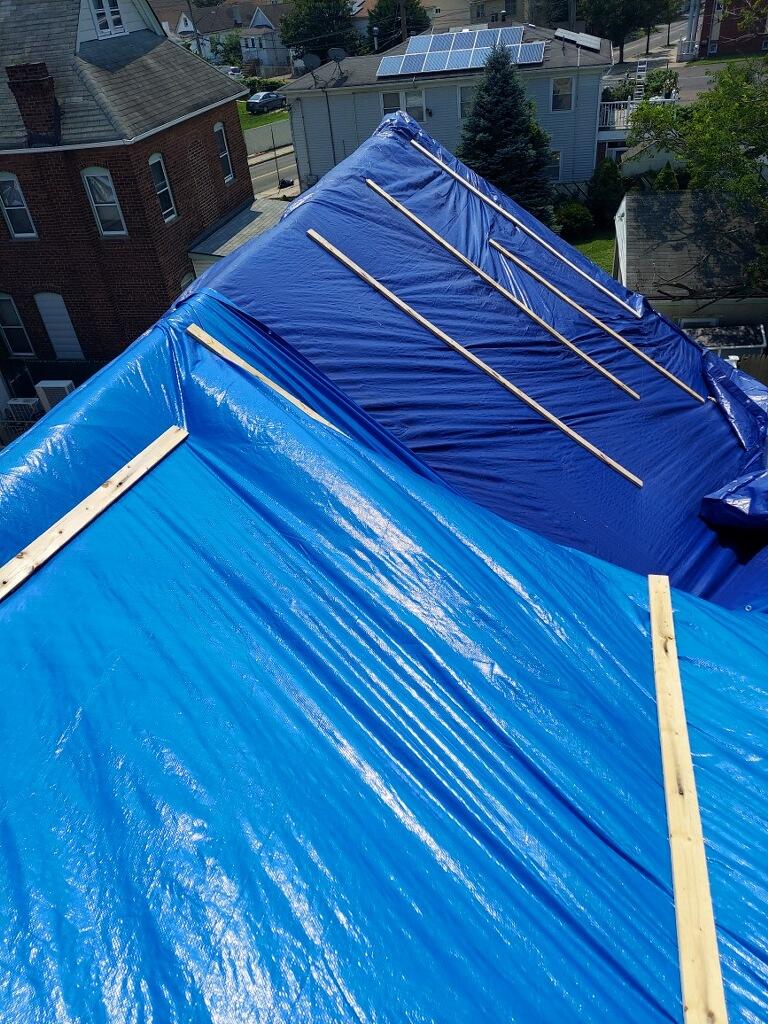
Storm-damaged asphalt shingle roof on Staten Island with lifted shingles and failed flashing being repaired by Anajur Construction.
[OPERATOR PHOTO: roof tear-off / failed flashing / emergency tarp on a Staten Island roof — swap in real project image]
By Jouri, founder of Anajur Construction Corp. · NYC DCWP HIC #1220350-DCA · Family-owned on Staten Island since 1997 · Last updated May 31, 2026 · Ceiling Water Damage · Reconstruction · Water Damage Restoration · Flood Cleanup
1997
Serving SI Since
Family-Owned
1
HIC License
Roof to Rebuild
13
ZIP Codes
All of Staten Island
S500
IICRC Standard
Water-Damage Drying
Why Staten Island Roofs Leak

The failure points that let water in — flashing, lifted shingles, pipe boots, ice dams, and flat-roof seams.

A roof almost never fails across its whole surface at once. It fails at a detail — a joint, a penetration, an edge — and water finds that single weak point. On Staten Island, the failure modes below drive the overwhelming majority of leak calls. Knowing which one you have determines whether the fix is a targeted repair or a section replacement, and it determines how the insurance claim gets scoped.

#1 Leak Cause

Failed Flashing

Flashing is the metal that seals the joints where the roof meets something else — chimneys, walls, skylights, vents, valleys. When the seal cracks or the metal corrodes, water runs straight in behind it. Failed flashing is among the most common sources of Staten Island roof leaks, and roof flashing repair is one of the repairs we make most often.

Storm & Wind

Lifted & Missing Shingles

Nor'easter and coastal winds lift, crease, or tear asphalt shingles, and a single missing shingle exposes the underlayment and deck to every rain that follows. Wind and hail damage is among the most common storm-driven losses on pitched SI roofs, and one of the losses most often covered by a homeowners policy.

Penetrations

Pipe-Boot & Vent Seals

The rubber boots that seal plumbing vents and the gaskets around exhaust penetrations dry out, crack, and fail — often within ten to fifteen years. They are a small, cheap component that causes a disproportionate share of ceiling stains directly below the penetration.

Winter

Ice Dams

Freeze-thaw cycles let snowmelt refreeze at the cold eave, building a dam that forces water back up under the shingles. North Shore homes with older assemblies, low pitch, and under-ventilated attics see ice-dam backups disproportionately.

Low-Slope

Flat-Roof Seam Failure

On the flat and low-slope roofs common to attached and row homes, water ponds and finds the seams. EPDM, TPO, and modified-bitumen membranes fail at laps, terminations, and drains. Flat roof leak repair is its own discipline and we scope it on its own terms.

Hidden

Decking Rot

When a leak has run undetected, the plywood or plank deck beneath the covering rots. Rotted decking can't be roofed over — it has to be cut out and replaced, which changes the permit picture (covered in the NYC code section below) and is the kind of hidden condition that drives a supplemental insurance claim.

Staten Island Roofs by Shore & Era

Why a roof on the North Shore fails differently than one rebuilt after Sandy on the East Shore.

Staten Island is the lowest-density, most single-family borough in New York City, and its roof stock reflects that. Pitched asphalt-shingle roofs on detached and semi-attached homes dominate; flat and low-slope membrane roofs are common on row homes, attached properties, and small multi-family buildings. But the bigger variable is geography — where the house sits changes how its roof fails.

North Shore (10301–10304, 10310): older housing with older roof assemblies, lower pitches, shorter overhangs, and frequently under-ventilated attics. Salt air off the harbor accelerates corrosion of fasteners and flashing, and the combination of low pitch and poor ventilation makes this corridor the island's hot spot for both chronic flashing leaks and winter ice dams.

South & East Shore after Hurricane Sandy: Sandy struck on October 29, 2012 and hit Staten Island harder than any other part of the city — at least 21 of the 43 New York City deaths occurred on Staten Island, and the surge along the East Shore reached roughly 9.56 feet above normal tide at the Kill Van Kull. In the years since, Build It Back and NY Rising rebuilt and elevated homes along the South Beach–Midland Beach–New Dorp Beach corridor to current flood code. The result is a band of newer raised-foundation housing with newer roofs and modern, hurricane-resistant roof-to-wall connections, governed by the 2022 NYC Building Code.

This matters for diagnosis and for the claim. An older North Shore flashing leak, a wind-lifted shingle field on a 1990s South Shore colonial, and a membrane seam on an attached row home are three different repairs with three different scopes. We diagnose to the specific assembly in front of us, not a generic "roof repair."
Emergency Response

An active roof leak is a clock — what to do before the crew arrives.

Emergency roof leak repair is about stopping the water from doing more damage while a permanent repair is scoped. If your roof is actively leaking, the first hours matter more than most homeowners realize — every hour of intrusion soaks more insulation, spreads across more ceiling, and raises the odds of mold behind the drywall. Here is what to do while you wait for a crew, and what we do when we get there.

What you can do safely from inside: move furniture and electronics out from under the leak, lay down buckets and towels, and if water is pooling against a ceiling and bulging it, a small relief puncture with a screwdriver at the lowest point will drain it into a bucket and prevent a larger collapse. Do not go onto a wet or storm-damaged roof — that is how injuries happen.

What we do on an emergency call: tarp or shrink-wrap the affected roof area to stop active intrusion, locate the entry point (which is frequently uphill of where the ceiling stain appears), and document the damage with timestamped photos — the same photos that anchor the insurance claim. Temporary protection holds the loss in place until the permanent repair and the claim scope are settled. A licensed roofer sealing the source is also a documentation requirement on the water-damage side: a carrier will question a drying claim if the roof source was never properly closed.

How a Roof Claim Job Runs

From the leak to the rebuild — one contractor across all five stages.

Most roofing companies are present for stage 4 only. The handoffs between a roofer, a restoration company, and a separate rebuild contractor are where scope arguments and schedule gaps happen. Here is how the whole job runs when one licensed contractor carries it end to end.

Roof-to-rebuild process: five stages under one license Stage one, leak or storm damage detected. Stage two, emergency tarp and documentation. Stage three, insurance claim scope to Xactimate. Stage four, permanent roof repair. Stage five, interior reconstruction handed off internally, not to a second contractor. 1 2 3 4 5 Leak / stormdamageDiagnose source Emergencytarp + photosStop the water Insuranceclaim scopeXactimate line items RoofrepairFlashing / shingles / deck InteriorrebuildSame license → ONE NYC HIC LICENSE (#1220350-DCA) · NO CONTRACTOR HANDOFF BETWEEN STAGE 4 AND STAGE 5
The roof repair (stage 4) and the interior reconstruction (stage 5) are the handoff most homeowners get stuck at. Under one HIC license, there is no handoff.
Storm Damage & the Roof Insurance Claim

Storm, wind, and hail roof damage — and how the insurance claim actually gets paid.

Storm damage roof repair is usually an insurance event, not an out-of-pocket one — but only if the claim is scoped and documented correctly. This is the part of the job most roofing companies treat as an afterthought ("we'll document it for you") and the part Anajur runs as a daily practice, because we price to Xactimate on the water-damage side every week. Here is what determines whether a roof claim gets paid.

Coverage

Covered Peril vs. Wear-and-Tear

Carriers pay for sudden, accidental storm damage — wind, hail, a tree limb — and deny damage they can attribute to age, deferred maintenance, or normal wear. The dividing line is documented at inspection. A storm date, directional wind evidence, and matched damage patterns are what move a claim from "maintenance" to "covered loss."

Payout Basis

RCV vs. ACV & Your Deductible

Replacement Cost Value pays to replace at today's cost; Actual Cash Value pays the depreciated amount and holds back recoverable depreciation until the work is done and invoiced. Wind and hail losses often carry a separate percentage-of-value deductible rather than a flat dollar amount. We model the real net number before work starts.

The Inspection

Adjuster + Contractor, Together

The strongest claims are scoped with the adjuster and the contractor on the roof at the same time, agreeing on damage and line items in person. We meet the field adjuster, walk the roof, and make sure the scope reflects the full damage — not just what is visible from the ground.

Supplements

When the First Estimate Misses Scope

The first carrier estimate routinely misses hidden conditions — rotted decking under the covering, code-required upgrades, interior water damage below. Each becomes a supplemental filing. We file supplements with photo and measurement evidence so they are approved rather than denied, the same way we do it on water-damage claims.

Your right to choose, in New York In New York, you have the right to choose your own contractor for an insured repair — an insurer may recommend a preferred vendor but cannot require one. If you want a licensed advocate to negotiate the claim itself, a New York public adjuster can represent you, and their fee is capped by state regulation at no more than 12.5 percent of the recovery (11 NYCRR §25.7). Anajur is your contractor, not your public adjuster — but we document the loss so thoroughly that most claims never need one.
Credentials

The license that lets one contractor go from the roof to the rebuild.

In New York City there is no separate state roofing license — residential roofing is performed under the same NYC Department of Consumer and Worker Protection Home Improvement Contractor license that governs interior reconstruction. That is the legal basis for handling the roof and the damage below it under one roof, one license, and one accountable contractor.

NYC DCWP HIC License
#1220350-DCA
Authorizes residential roofing repair and replacement and the interior reconstruction that follows a leak — under one license. Verify on the DCWP licensee search.
NY State Registration
DOS #2160072
Anajur Construction Corp., a New York corporation, family-owned and operating on Staten Island since July 1997 — with a multi-trade crew and a daily Xactimate insurance practice.
When a Roof Leak Reaches the Ceiling

A roof leak doesn't stop at the roof — and that's where one license changes the outcome.

By the time most homeowners notice a roof leak, the water has already reached the ceiling: a brown stain, a sagging patch of drywall, soaked insulation in the attic, sometimes mold starting in the cavity. Repairing the roof stops the source. It does not fix the ceiling, the wall, or the insulation the water already ruined — that is water damage roof repair in the full sense: fixing the roof and the damage the roof let in.

This is the handoff where homeowners get stuck. A roofing company repairs the roof and leaves; a separate contractor has to be found for the interior; the two argue over what caused what, and the rebuild waits. Because Anajur carries the construction license for both, the roof source and the interior damage are scoped and rebuilt as one job. We seal the source, then repair the ceiling water damage the roof leak caused, and where the damage runs deeper we handle the full interior reconstruction after the roof leak — drywall, insulation, framing, and finish. The drying and interior detail live on those pages; this page stays on the roof and the claim.

This is simply how we are set up — local, residential, one HIC license, and an in-house Xactimate practice. It is the same discipline behind our broader water-damage restoration work under one license. The point isn't that no one else touches both sides; it's that here, the roof and the rebuild are never two separate phone calls.

Repair or Replace

When a targeted repair is right — and when storm damage means the roof is done.

Not every storm-damaged roof needs replacing, and we don't quote a replacement when a repair will hold. A single failed flashing, a localized field of lifted shingles, or one bad pipe boot is a repair. The honest answer depends on the age of the covering, how widespread the damage is, and whether the deck underneath is sound.

Replacement becomes the right call when the damage is widespread across the field, when the covering is near the end of its service life and repairs would be money spent on a roof about to fail anyway, or when the deck has rotted and can no longer serve as a base. As a licensed general contractor we perform full replacement when it is warranted — but we frame it as "when repair isn't enough," with the condition documented, not as a default upsell. When a replacement is insurance-driven, the same claim discipline applies: the scope reflects the actual covered damage, supplements included.

NYC Roofing Rules

Permits, layer limits, sustainable-roof laws, and asbestos — what actually applies to a Staten Island roof.

Roofing in New York City carries code requirements most homeowners have never heard of, and some roofers get them wrong. Here is what genuinely applies to a residential roof repair or replacement on Staten Island, cited to the code.

Permits

Deck vs. Covering Decides It

Like-for-like replacement of the roof covering above the deck is generally an ordinary repair that does not require a DOB permit (NYC Admin Code §28-105.4.2). A permit is required when the deck or sheathing is replaced, when structural work is involved, or when the roof type changes. The governing distinction is deck-and-structural versus covering-only — not a percentage of the roof.

Layers

Two Layers, Then Tear-Off

Per NYC Building Code §1511.3.1, a new covering may not be installed over the existing one — the roof must be stripped to the deck — where the existing roof is water-soaked or deteriorated, where the covering is slate, clay, cement, or asbestos-cement tile, or where the roof already has two or more applications of any covering. In practice: two layers maximum before a mandatory tear-off.

Sustainable Roofs

LL92/94 Won't Hit Your Reroof

Local Laws 92 and 94 of 2019 require a green roof or solar zone only when the entire roof deck or assembly is replaced, or on new buildings and enlargements. NYC DOB states a sustainable roof is not required for a project that only replaces the roof covering. Pitched roofs over 17% slope that would hold under 4kW of solar are separately exempt (BC §1511.2). A normal shingle or membrane reroof owes nothing here.

Asbestos

Pre-1987 Buildings & ACP-5

When permitted roof work (such as a deck replacement) is done on a building built before April 1, 1987, NYC requires an asbestos assessment by a DEP-certified investigator, filed on Form ACP-5 (or ACP-7 for an actual asbestos project) before the permit issues. Because covering-only reroofs usually need no permit, this typically only applies to deck-level work on older homes. We flag it up front so it never becomes a surprise delay.

These are the rules as written; DOB and DEP apply them to the specifics of each building, and we defer final determinations to the department and a licensed design professional where required.

Why One Contractor Matters

One NYC-licensed contractor, from the roof to the rebuild.

The reason this matters isn't a slogan — it's the three places a roof job goes wrong when it's split between companies: the scope argument at the roofer-to-rebuilder handoff, the schedule gap while a second contractor mobilizes, and the double mobilization the homeowner never gets warned about. Each disappears when one licensed contractor owns the whole job.

Anajur's version of that is specific: family-owned and on Staten Island since 1997, residential-focused, working under a single NYC DCWP Home Improvement Contractor license (#1220350-DCA), with an in-house Xactimate insurance practice we run every week on the water-damage side. The roof gets repaired, the claim gets documented, and the water-damaged interior gets rebuilt — under one contract, with one project manager, on one timeline.

Recent Staten Island Roof Work

What roof-to-rebuild jobs look like on the island.

Real Staten Island roof work — the failures we see, by neighborhood and scope, carried through to a finished interior.

Storm / East Shore

Post-Sandy Storm Roof + Interior

When a storm strips shingles on the exposed East and South Shore, water doesn’t enter in one place — it finds every opening at once, and a roof job becomes an interior one. We’ve craned fallen trees off houses, encapsulated the opened roof to stop the water before it flooded the home, and carried the job straight through to the finished interior rebuild.

Flashing / North Shore

Flashing & Ice-Dam Leak to Ceiling

On older North Shore assemblies the leak usually isn’t the field of the roof — it’s tired flashing at a valley, chimney, or sidewall, or an ice dam backing water under the shingles until it shows up as a ceiling stain. We trace it to the real entry point, repair the flashing or detail, and restore the interior it damaged.

Wind / Hail Claim

Wind/Hail Claim with Supplement

Wind and hail damage is often scoped short on the first carrier estimate. We document it to Xactimate line by line and supplement what the initial scope left out — matching what the roof actually needs to be made whole, not what fit the first number.

Flat / Row Home

Low-Slope Membrane Leak

On attached and row homes with low-slope roofs, the failure is usually a seam or a flashing termination on the membrane, not the whole roof. We find the section that’s letting go, repair or re-detail it, and handle any interior the water reached.

A Note on Mold

If a roof leak ran long enough to grow mold.

A roof leak that went undetected for weeks can grow mold in the attic, in insulation, or in a wall cavity below the entry point. Anajur does not perform mold remediation on Staten Island — it is a distinct specialty governed by its own standard (IICRC S520) and requires a licensed mold-remediation specialist. If our inspection finds active mold, we will tell you plainly and recommend you bring in a qualified remediation contractor for that scope before the interior rebuild begins. We will repair the roof source that caused it.

Service Area

Roof repair across all of Staten Island — 13 ZIP codes.

Anajur serves the entire borough of Staten Island (Richmond County): the North Shore (10301, 10302, 10303, 10304, 10310), the East Shore and Mid-Island (10305, 10306, 10314), and the South Shore (10307, 10308, 10309, 10312, plus 10311). From older salt-air assemblies on the North Shore to the post-Sandy rebuilt stock on the East and South Shores, we work every roof type the island has — pitched asphalt shingle, flat and low-slope membrane, metal, and slate.

Frequently Asked Questions

What Staten Island homeowners ask about roof leaks, storm damage, and the claim.

Move valuables out from under the leak and contain the water with buckets and towels. If a ceiling is bulging with trapped water, a small relief puncture at the lowest point drains it safely into a bucket and prevents a larger collapse. Do not climb onto a wet or storm-damaged roof. Call a licensed roofer to tarp the source and document the damage — the same photos anchor your insurance claim.
Usually yes for sudden, accidental storm damage — wind, hail, or a fallen limb — documented at inspection. Carriers deny damage they attribute to age, wear, or deferred maintenance, so a storm date and matched damage patterns matter. Roof leaks during a covered storm and the interior water damage they cause are typically covered; gradual leaks from a worn-out roof often are not. Flooding from rising water outside the home is separate and needs NFIP coverage.
You report the loss, the carrier assigns a field adjuster, and the roof is inspected — ideally with your contractor present to agree on damage and scope in person. The carrier issues an estimate, often at Actual Cash Value first, holding back recoverable depreciation until the work is completed and invoiced. Hidden conditions found later are filed as supplements. Anajur scopes to Xactimate line items so our estimate and the carrier's speak the same language.
A denial is often a documentation problem, not a final answer. Claims get denied when storm causation isn't established or scope is under-documented. The fix is evidence: a documented storm date, directional damage patterns, measurements, and photos that separate covered storm damage from wear-and-tear. Anajur re-documents the loss and files for reconsideration or a supplement. You can also engage a New York public adjuster, whose fee is capped at 12.5% of the recovery (11 NYCRR §25.7).
Wind and hail are covered perils on most homeowners policies, but they frequently carry a separate percentage-of-value deductible rather than a flat dollar amount, so the net payout math is different. The claim turns on proving storm causation — the date, the direction, and damage patterns consistent with wind or hail rather than age. We inspect with the adjuster, scope the full damage to Xactimate, and supplement for anything the first estimate misses.
Yes. In New York you have the right to choose your own contractor for an insured repair. An insurer may recommend a preferred vendor but cannot require you to use one. You are also free to hire a licensed New York public adjuster to negotiate the claim on your behalf; their fee is limited by state regulation to no more than 12.5 percent of the recovery (11 NYCRR §25.7). Anajur acts as your contractor, scoping and documenting the loss.
Not for a normal residential reroof. Local Laws 92 and 94 of 2019 require a sustainable roofing zone — a green roof or solar — only when the entire existing roof deck or assembly is replaced, or on new buildings and enlargements. NYC DOB states a sustainable roof is not required for a project that only replaces the roof covering. Pitched roofs over 17% slope that would accommodate under 4kW of solar are separately exempt (BC §1511.2).
Like-for-like replacement of the roof covering above the deck is generally an ordinary repair that does not require a DOB permit (NYC Admin Code §28-105.4.2). A permit is required when the deck or sheathing is replaced, when structural work is involved, or when the roof type changes. As a licensed Home Improvement Contractor, Anajur files any required permit through DOB NOW: Build under HIC #1220350-DCA — the deck-versus-covering distinction, not a percentage, decides whether one is needed.
Schedule a Roof Inspection

Get a roof inspection and an itemized estimate from a licensed contractor.

Whether you have an active leak, storm damage to scope for a claim, or a roof at the end of its life, we'll inspect the roof, document the damage for your insurer, and write an itemized estimate priced to NY Xactimate (insurance) or fixed-bid (cash-pay) — with the roof-to-interior plan and any permit and timeline expectations called out clearly.

If your roof is actively leaking right now, please call directly so we can get a tarp on it.

Call Anajur · Staten Island (917) 969-1378