Emergency Response · Staten Island
NYC DCWP HIC #1220350-DCA · Family-Owned Since 1997
NYC DCWP HIC #1220350-DCA · Since 1997

Water Damage Restoration in St. George & Staten Island’s North Shore

From burst pipes in pre-war homes to sewer backups and harborfront flooding, we handle flood cleanup to permitted repairs and full rebuild, under one licensed Staten Island contractor.

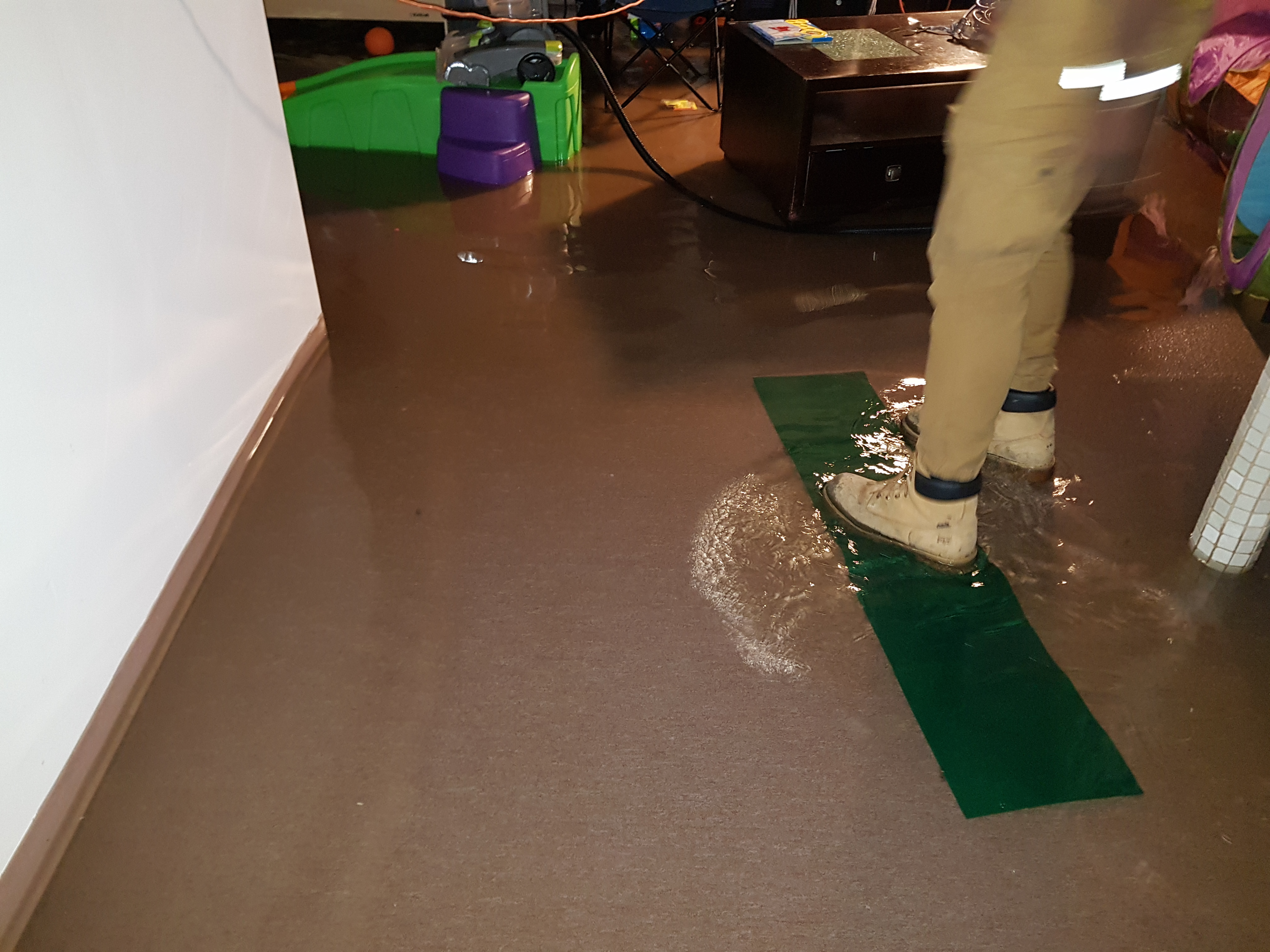
Water damage restoration in a pre-war St. George home on Staten Island under NYC DCWP HIC #1220350-DCA

Anajur Construction Corp. handles water damage for homeowners in St. George, Tompkinsville, and New Brighton — the North Shore neighborhoods inside ZIP code 10301. The water-damage problems here are specific to this corner of the borough: some of the oldest housing stock on Staten Island, a combined sewer system that backs up in heavy rain, and a harborfront that took storm surge during Sandy. We are a NYC DCWP-licensed general contractor (#1220350-DCA) running the full arc — emergency water damage cleanup through permitted reconstruction — as one file, one phone call to Jouri direct at (917) 969-1378.

NYC DCWP HIC LICENSE
#1220350-DCA
Verifiable at NYC Consumer & Worker Protection · Active since 1997
By Jouri, founder of Anajur Construction Corp. · NYC DCWP HIC #1220350-DCA · Family-owned on Staten Island since 1997 · Last updated June 3, 2026 · Water Damage Restoration · Flood Cleanup · Basement Flooding · Sewage Cleanup
1997
Established
Family-Owned on Staten Island
10301
North Shore
St. George · New Brighton · Tompkinsville
1
Licensed GC
Cleanup Through Rebuild
13
ZIP Codes
All of Staten Island
Section 01 · The North Shore

Why water damage on Staten Island’s North Shore is its own problem

St. George, Tompkinsville, and New Brighton sit on the North Shore along the Upper Bay and the Kill Van Kull. Three things shape almost every water-damage loss we see in 10301: the age of the housing, the combined sewer system underneath it, and the harborfront exposure at the water’s edge.

That mix is different from the rest of the borough. The East and South Shores are defined by ocean surge; central Staten Island by stormwater on lower-lying inland ground. The area’s signature is older homes — many over a century old — sitting above a combined sewer, a short distance from a working harbor. Each of those three factors drives a different kind of water damage and a different insurance conversation, so the first thing we do on a loss here is establish which one caused it.

Anajur runs this work as a single file, from the first emergency call through the rebuild. We are a NYC DCWP-licensed general contractor (HIC #1220350-DCA), not a remediation-only crew — which means the same licensed contractor who dries the house also pulls the permits and rebuilds it. For the underlying mechanics of any one loss type, the sections below route you to the dedicated page; this page is about how those losses actually happen in St. George and across 10301.

Section 02 · Local Risk Profile

The five water-damage scenarios we see most in 10301

Ranked by how often they bring us to a 10301 address. Each one routes to the dedicated service page for the full process — here is why it happens here.

01
Burst & failed plumbing

The most common call we get. Homes in the St. George/New Brighton Historic District were largely built in the 1880s and 1890s, and original galvanized supply lines and cast-iron drains fail far more often than modern plumbing — a burst supply line behind a plaster wall can release water for hours. Routes to burst pipe water damage and water damage restoration.

02
Sewer backups

Much of the North Shore runs on a combined sewer that carries sewage and stormwater in one pipe, draining to a single North Shore treatment plant. NYC DEP notes as little as a tenth of an inch of rain can overwhelm a combined system; when it surcharges, wastewater backs up into basements. Routes to sewage cleanup.

03
Harborfront flooding

The blocks closest to the water — lower St. George and the Tompkinsville waterfront along Bay and Front Streets — carry coastal-flood exposure. Hurricane Sandy pushed surge up those streets in 2012. Routes to flood cleanup.

04
Basement flooding

Where the three above converge: a sewer surcharge, a failed or overwhelmed sump pump, or groundwater in a low-lying harbor block fills a basement. Routes to basement flooding and sump pump failure.

05
Hillside runoff

The part of Grymes Hill inside 10301 is the second-highest point on Staten Island, rising to 374 feet directly above the St. George and Tompkinsville lowlands. In heavy rain that elevation sheds runoff downhill onto the lower blocks, where it pools against foundations and works into basements. Routes to basement flooding.

Section 03 · Historic Housing

St. George and New Brighton hold some of the oldest homes on Staten Island

The St. George/New Brighton Historic District was designated by the NYC Landmarks Preservation Commission on July 19, 1994. Roughly 76 of its original buildings are still intact, and the majority were built in the 1880s and 1890s — with Hamilton Park in New Brighton holding the densest concentration of pre-1880 Victorian housing anywhere on Staten Island. And the age isn’t limited to the landmarked blocks — in Tompkinsville, NeighborhoodScout reports 57.8% of the housing was built in 1939 or earlier.

Beautiful housing, and a specific water-damage exposure. Homes of that era were plumbed with galvanized steel supply lines and cast-iron drains that corrode from the inside over decades; by the time a pinhole becomes a burst, the failure is often behind original plaster and lath where it goes unseen until the ceiling below stains. The same age brings a second wrinkle: any Staten Island building constructed under plans filed on or before April 1, 1987 triggers asbestos certification before cavity demolition under NYC Admin Code §28-106.1. On a pre-war St. George home, that filing is part of the job — Anajur handles the ACP-5/ACP-7 step before opening a wall, rather than discovering it mid-claim.

This is also where being one licensed contractor matters most. An old home that floods needs careful demolition, often plaster restoration to match a landmarked exterior’s interior character, and a rebuild that satisfies both the carrier and, where applicable, Landmarks review. We carry that from extraction through reconstruction — see burst pipe water damage for the plumbing-failure path and reconstruction after water damage for the rebuild.

Section 04 · Sewers & Surge

How rain and tide drive North Shore water damage

Two water sources beyond the plumbing: the combined sewer below the street, and the harbor at the foot of it.

The combined sewer. The North Shore runs on a combined sewer system — wastewater and stormwater sharing one pipe — that drains to the Port Richmond Water Resource Recovery Facility. Per NYC DEP, that plant serves roughly 200,000 residents across a nearly 10,000-acre North Shore drainage area, built to treat 60 million gallons a day, with capacity for up to 120 million during a storm. The trouble for a homeowner starts past that ceiling: NYC DEP notes as little as one-tenth of an inch of rain can push a combined system beyond capacity, and when it surcharges the overflow has to go somewhere — in low-lying blocks it backs up through basement floor drains. That is a Category 3 (black-water) loss under IICRC S500, and it routes to sewage cleanup and, once cleared, to the rebuild.

The harbor. During Hurricane Sandy on October 29, 2012, storm surge pushed up Bay and Front Streets in St. George, Tompkinsville, and New Brighton, with Staten Island storm tides reaching roughly 14.5 feet. It is worth being precise about this, because the page should be honest: Sandy’s catastrophic residential losses were on the East and South Shores — Midland Beach, New Dorp, Tottenville — not the North Shore. Here, the real, ongoing exposure is the harborfront blocks closest to the water, which is why the city’s post-Sandy North Shore resilience plan runs an esplanade from Stapleton through Tompkinsville to St. George. Coastal flooding of those blocks routes to flood cleanup.
Section 05 · Services

Water-damage services across St. George & the North Shore

Every loss type we handle for 10301 homeowners, each on a dedicated page. We carry all of them from cleanup through the rebuild.

The full mitigation-through-rebuild service for any water loss in 10301 — the place to start if you are not sure which category your loss falls under.

Coastal and storm flooding of harborfront St. George and Tompkinsville blocks.

Category 3 backups when the North Shore combined sewer surcharges in heavy rain.

Flooded basements in low-lying harbor blocks and older New Brighton homes.

Failed supply lines in the area’s 1880s–1890s housing stock.

Groundwater losses when a basement pump fails or is overwhelmed.

Stained and sagging ceilings from a leak on the floor above — common in multi-story homes here.

The permitted rebuild once the structure is dry — the second half most remediation companies don’t do.

Section 06 · One Contractor

One licensed contractor, from cleanup to rebuild

Most water-damage companies serving Staten Island are remediation-only: they extract the water, dry the structure, and then hand you a list of contractors to call for the rebuild. That leaves the homeowner managing two companies and two halves of one insurance claim.

Anajur is a NYC DCWP-licensed general contractor (HIC #1220350-DCA, NY DOS #2160072), family-owned on Staten Island since 1997. We run the IICRC S500-track mitigation and the permitted reconstruction as a single file — one estimate the carrier’s desk reviewer can read line by line, one point of contact, one company accountable from the first emergency call to the final invoice. Where a loss needs a specialist — a licensed Master Plumber on a pump, or an IICRC S520 mold-remediation specialist above the EPA’s visible-mold threshold — we coordinate that sub-trade and remain the contractor of record on the rebuild.

For St. George specifically, that continuity matters: these are old, often landmarked homes where the demolition and the rebuild both have to be done with care. Get a free estimate or call Jouri direct at (917) 969-1378.

Further Reading

Three Anajur guides for a North Shore water-damage claim

FAQ

Water damage in St. George & the North Shore — seven questions homeowners ask

Often, yes. St. George and New Brighton hold some of the oldest housing on Staten Island — the St. George/New Brighton Historic District, designated by the NYC Landmarks Preservation Commission in 1994, is made up largely of homes built in the 1880s and 1890s, and Hamilton Park has the densest concentration of pre-1880 Victorian housing on the island. Original galvanized supply lines and cast-iron drains in homes of that age fail more often than modern plumbing, which is why burst pipes and hidden supply-line leaks are among the most common water-damage calls in 10301.

They can. Roughly 60% of New York City — including much of the North Shore — runs on a combined sewer system that carries sewage and stormwater in the same pipe. NYC DEP notes that as little as one-tenth of an inch of rain can overwhelm that system. When the system surcharges, wastewater can back up through floor drains into low-lying basements. That category of loss routes to our sewage cleanup work.

The North Shore waterfront was. During Hurricane Sandy on October 29, 2012, storm surge pushed up Bay and Front Streets in St. George, Tompkinsville, and New Brighton, with Staten Island storm tides reaching roughly 14.5 feet. To be accurate: Sandy’s catastrophic residential losses were on the East and South Shores — Midland Beach, New Dorp, Tottenville — not the North Shore. Here, the real exposure is the harborfront blocks closest to the water. That kind of coastal flooding routes to our flood cleanup work.

Yes. Basement flooding in 10301 usually traces back to one of three things: a combined-sewer backup during heavy rain, groundwater overwhelming a failed or undersized sump pump, or surface water in a low-lying harborfront block. We diagnose which mechanism caused the loss — because it determines how the insurance claim is handled — and carry the job from water extraction and drying through any reconstruction the basement needs.

Both, under one license. Most water-damage companies on Staten Island are remediation-only — they extract the water and dry the structure, then hand you off to find a separate contractor for the rebuild. Anajur is a NYC DCWP-licensed general contractor (HIC #1220350-DCA). We run the IICRC S500-track mitigation and the permitted reconstruction as a single file, so you are not managing two companies and two insurance conversations. One call to Jouri, start to finish.

All 13 Staten Island ZIP codes. On the North Shore, ZIP 10301 covers St. George, Tompkinsville, and the 10301 side of New Brighton, along with Silver Lake and the part of Grymes Hill inside the ZIP. (Randall Manor and Stapleton sit on the 10301 edge and shade into neighboring ZIP codes.) Anajur is family-owned on Staten Island and has worked across the borough since 1997.

The harborfront blocks are. St. George’s and Tompkinsville’s waterfront falls within FEMA’s high-risk flood mapping along the Upper Bay and Kill Van Kull, while the higher interior ground generally does not. One wrinkle worth knowing: New York City’s flood-insurance rate maps still run off FEMA’s 2007 Effective maps (updated by later map revisions), and FEMA’s broader remapping of the city after its 2015 preliminary maps is still working through review — so a specific block’s official zone is best confirmed with an address lookup at the FEMA Map Service Center or the NYC Flood Hazard Mapper before you rely on it.

Water damage in your St. George or North Shore home?

Anajur Construction Corp., NYC DCWP HIC #1220350-DCA, family-owned on Staten Island since 1997. One call to Jouri direct. One file from the first emergency through the final invoice — cleanup to rebuild, under one license.

Call Anajur · St. George (917) 969-1378